This journal says a refit delivers two things, the yacht and the file. It delivers three, and the third has no paperwork at all.
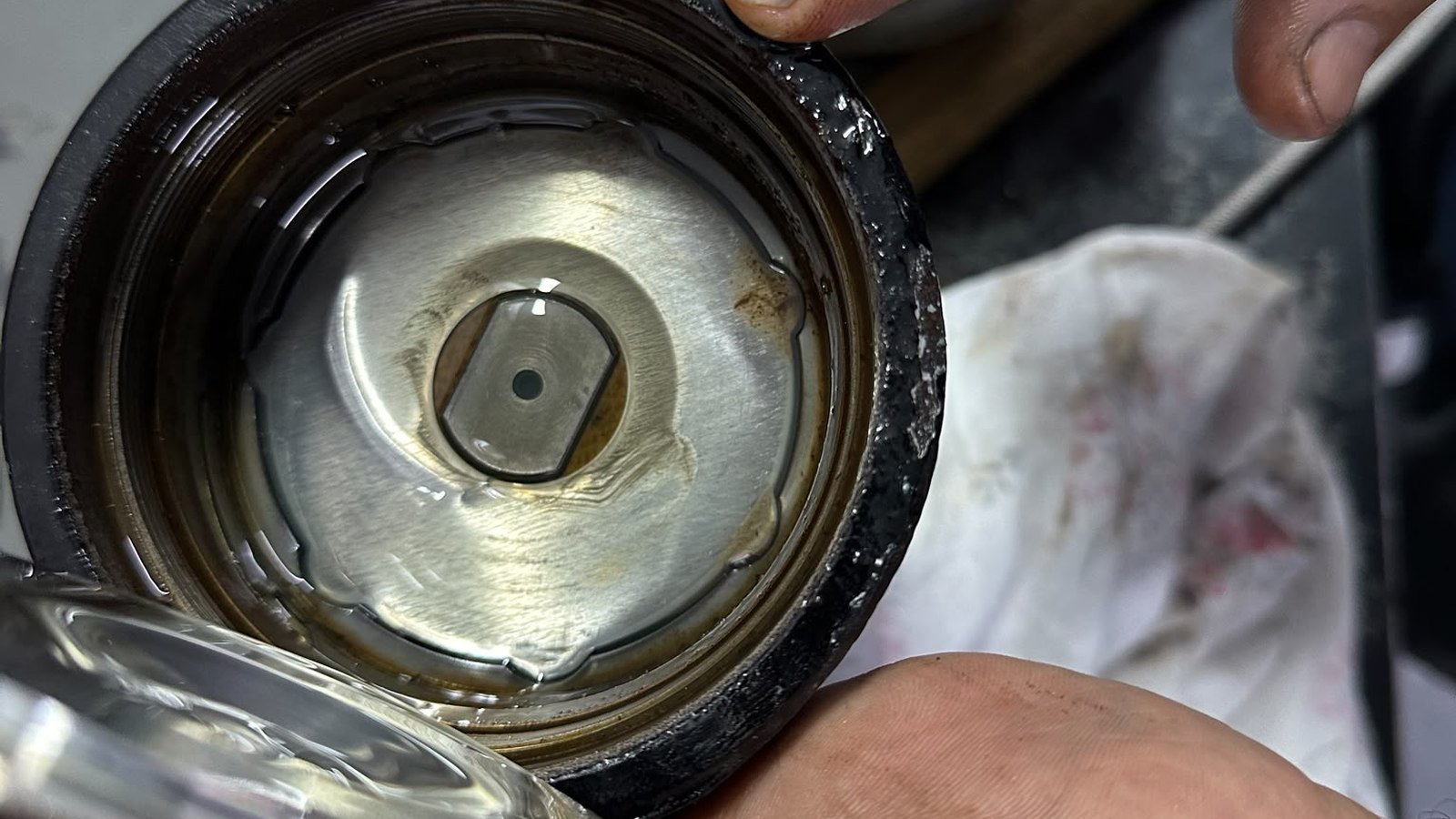
The third is the material that comes off her: a condemned generator set landed in the hall, a switchboard, a pair of bronze fittings. Each was bought by the owner. None of it appears in the file that leaves with her, and a contract that prices the fitting of the new is silent on the title of the old.
The sixth column
That silence is structural. A line item becomes biddable, this journal has argued, when it carries five things: the system and where it is, the verb, the standard it is measured against, who supplies the material, and what is handed over at close-out. One thing those five leave out has been named here already, the language of the permanent marking. That was a silence about work; this silence is about who owns what the work produces. Renew and replace both imply that something comes off first; none of the five says what that removal produces.
Set them out as columns and there is one for where the new part comes from and none for where the old one goes. A sixth closes a different kind of gap: disposition, a question of title rather than of workmanship, written against the line before anything is unbolted. This journal has argued the opposite case for finishes, that no written entry substitutes for a retained object; a disposition escapes that because it names a destination rather than a quality. It costs a few words per line at drafting. Leave it blank and nothing is settled the wrong way; nothing is settled at all, and the item waits on the floor for an instruction no document obliges anybody to give.
Whether the old unit can be got out of the compartment at all is a question of access rather than of property, and the route the old one takes out is listed there among the gates engine hours cannot overrule. Disposition begins when it is on the floor.
What the yard assumes about title
Condemning a unit is an engineering opinion, not a conveyance. The working assumption here is plain: an owner still owns that generator set in the week it is declared beyond economic repair, and owns it on the pallet as much as on its mounts. What changes is possession, which people mistake for ownership the moment it stands on the yard's floor.
Three parties stand near one condemned unit, and only two of the three positions are ours to describe:
- The owner, who bought it and has never sold it.
- The yard, which quoted the removal as labour and may be sitting on a residual value it never priced.
- On an insured repair, the underwriter. Whether a reinstatement payment carries any interest in the part it replaced is between the owner, the broker and the underwriter, not ours to state.
The uncomfortable one is the second, and it is ours. Whether a condemned unit is worth anything is not the yard's judgement to make, and a yard that quietly disposes of it has made that judgement anyway. Better said about ourselves than heard from someone else.
Removed equipment during a yacht refit in Turkey
Turkey refitting is argued as a labour question. Removed equipment raises one no hourly rate answers.
A foreign-flagged yacht enters under a temporary importation regime. Whether a component that entered as part of the vessel stops being a customs object when it is unbolted is not a question the yard can answer. Her entry regime, her agent and the clearance of imported parts into the project are set out in planning a yacht refit in Turkey.
The person to ask is her agent, who runs the interface with customs; a condemned unit belongs in their post-bag. Ask at specification stage, in writing, not when a pallet stands at the gate.
Why the stores were not built for it
When the stores moved next to the berth, the case was that what is on the shelf is what the sheds will need. Every line of that argument faces one way: material bought against a known programme, on the shelf before any trade asks for it. A condemned unit has no purchase order behind it and no line expecting it. That shelf was built for the other direction, and an item without a disposition stays where it was put.
The number on the plate
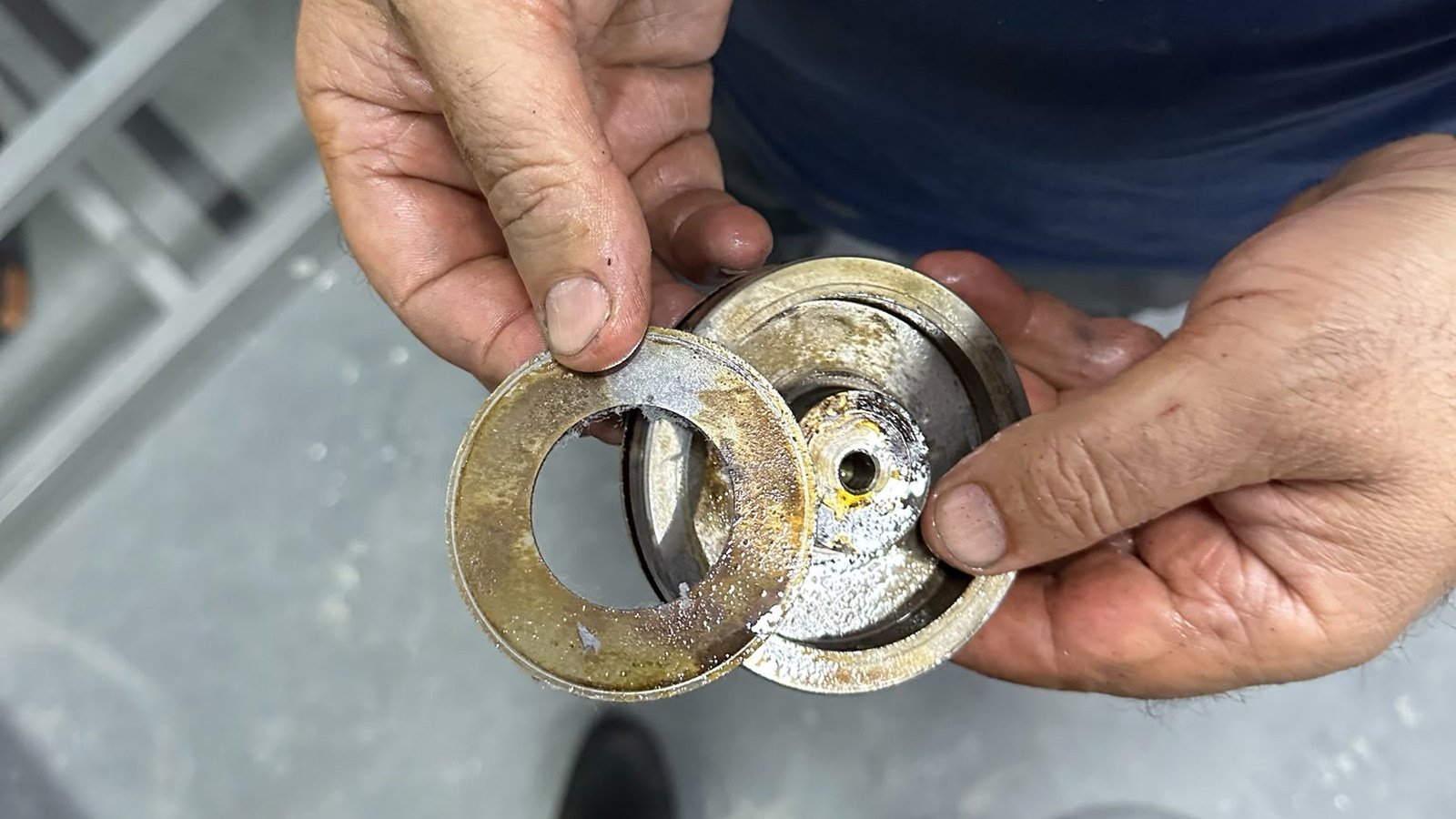
Measuring a yacht for a refit already publishes the removed part as the only record of how something was seated: countersunk holes and smears of old sealant that exist on no drawing. That argument is about what the old part tells the new one.
There is a duller reason to write its number down: custody rather than evidence. Once it is on a pallet under a sheet, the plate is the only thing identifying it. Removed machinery disposition comes down to a name and a destination, written beside a number while it is still legible.
The strip-out register
The instrument already has a name. A strip-out register: each item listed against the work-list line that removed it, photographed, with a disposition beside it, in the week it came off, not at redelivery. One register, kept on the yard's side and not by whichever trade happened to lift the item out.
The three-disposition habit is borrowed from the arrival walk, which gives every item in the first week one of recorded and left, recorded and quoted, or disagreed and initialled. A removed unit wants that shape and different words.
The register is not the signed landing inventory of tenders and toys, which settles whose cover loose gear sits under while she is ashore. Nor is it the documented waste stream with a receipt at the end that takes residues and spent media away. Spent grit was never anybody's property. A unit with a serial number is.
Where the yard's authority stops
The yard's side of this is record-keeping, and it stops short of deciding. It can list what comes off against the line that removed it, keep the plate legible and the photograph dated, hold it in a named place while somebody decides, and hand the register into the file. Stage One at Reviva ends with an approved scope and a price that does not move, and a blank disposition column costs it nothing.
The rule we work to is a house rule, not a ruling: nothing that came off her leaves this site without a written instruction from the owner's side, and until one arrives the item keeps its number and its place. What that instruction may lawfully say is not ours to draft.
What the yard will not do is decide. The obstacle is authority rather than care: a foreman cannot transfer one person's property to another however much care they take, and no conversation on the floor becomes the written instruction. Put the column in the specification and the instruction exists before the pallet does. The register goes into the file at the end, and the third thing the refit delivered stops being the one without paperwork.
Written at the yard in Tuzla. Nothing here is a customs, tax or legal opinion: what any regime permits for material removed from a vessel under a temporary importation regime belongs with the vessel's agent and the owner's own adviser, and is not ours to state.
Send the work list with the removal lines marked
Send the draft work list with every line that says renew or replace marked, and name the larger items those lines will land on the floor: the generator set, the switchboard, the pair of bronze fittings. We mark each of those lines twice over, once as a property question and once as a customs question: who on the owner's side names the destination, and whether her agent has been asked. The yard can answer neither, and the two are not answered by the same person. We are not asking anyone to fill in the disposition column now, only that it exists before the specification goes out to yards. Write to info@revivarefit.com, or telephone the yard on +90 (850) 226 28 72.
START A REFIT