
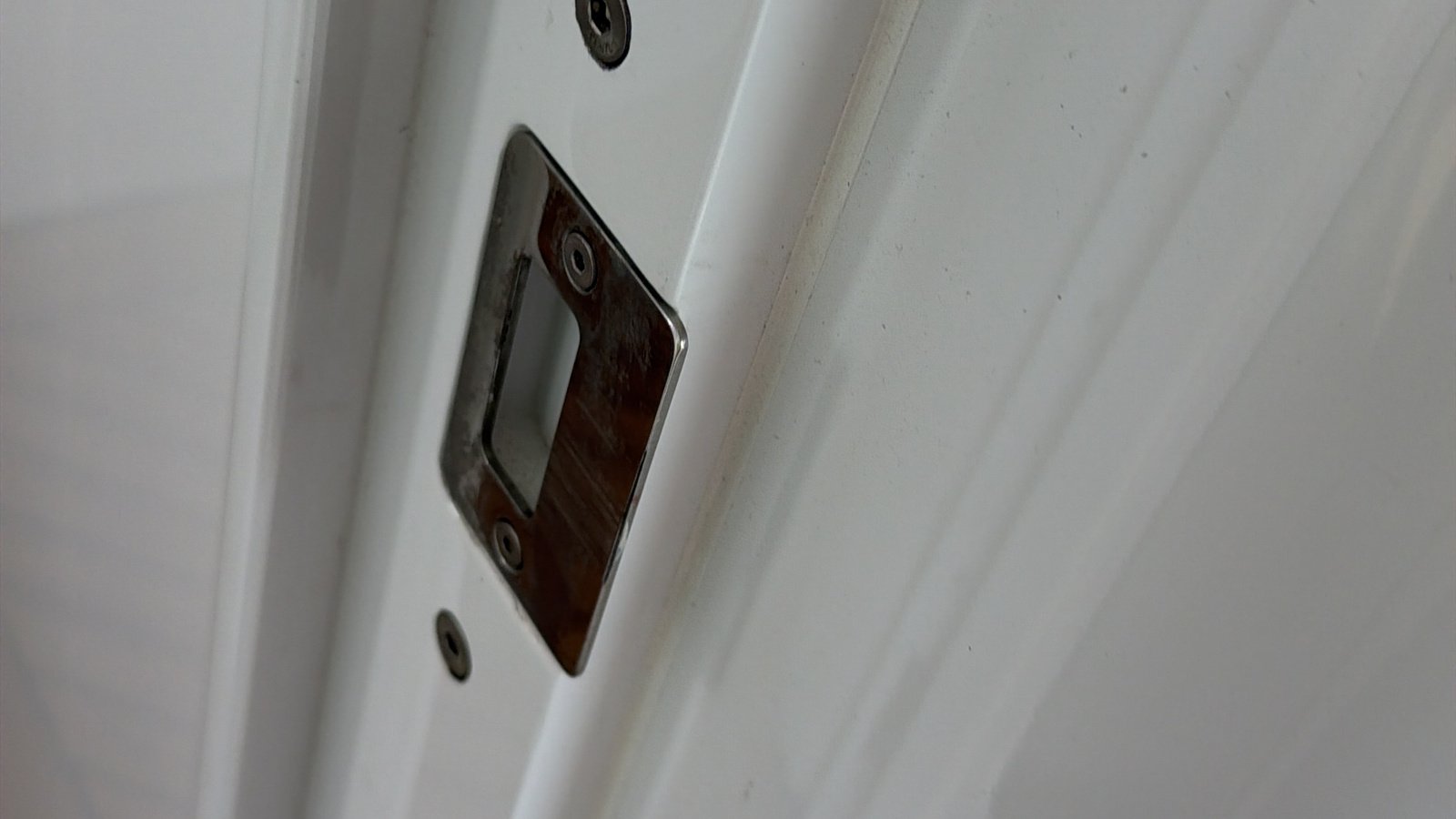
The snag list arrives on the last morning, and three of its items are not ours. A hairline chip in the black lacquer band beside a window fastening. A striker plate corroded through, behind a door nobody from this yard opened. A passerelle that will not run out to its stops. The manager who ran the job knows, in the way an experienced person knows something he cannot demonstrate, that all three arrived with her. It is nine months since she came alongside, and nobody from the yard stood beside her captain on the morning she did.
A yacht arrival condition report is the document that answers that morning. Her insurance position during the yard period, the landing inventory of tenders, toys and artwork, the keys and the gate log are settled in what a yard's cover reaches and where it stops, and the photograph-before-the-cut discipline in the betterment line. This post is about the first two days.
The exposure in week one is attribution
A yard's largest uninsured exposure in week one is not fire, not theft and not a dropped hull. Those are priced instruments, with a limit, a deductible and a claims process, and somebody underwrote them. The exposure nobody prices is attribution.
Ship repairer's liability answers for what the yard did. Nothing answers for what the yard is accused of having done, and the accusation need not be dishonest to succeed. It only has to arrive six months later, when everyone who saw her that morning was on her own crew. A yard that takes a vessel without an arrival record carries, by default, every defect she brought with her.
That inverts who is supposed to want the walk. Owners treat it as a courtesy the yard offers; in fact the yard carries the exposure, which is why the yard chases the walk and the owner's side has to be persuaded into giving a morning to it. That is worth saying plainly rather than dressing up: we chase this walk, and part of the reason we chase it is us.
Who signs it, and whether the signature has standing
The people who deliver her are frequently not the people who will run her here. A delivery crew flies home the same evening. The captain may not be back on rotation for three weeks. The owner's representative may not be appointed yet.
A sheet countersigned by a delivery skipper with no standing stacks an argument about authority on top of the argument about the chip, which is worse than no record, because it looks like one. So the signatory is nominated before the passage, in writing, by whoever holds the owner's authority, alongside the name of the person reachable at night who can decide for the vessel, which the insurance post already asks for: one more name on a sheet being written anyway. If that person cannot be aboard on the day, it is worth knowing before she arrives rather than at the gangway.
Photograph what will be walked past
A yard's record habit photographs what is about to be hidden, which is the discipline behind the file that leaves with her, and it is the right habit for anything the yard will be asked to answer for.
It is the wrong habit for damage the yard never touched. The arrival record works the other way round. Topsides at fender height and around the gangway landing. The lacquer and trim beside window fastenings. Handrails, capping and stair nosings along the route the trades will use, which is rarely the route the crew use. Every dark and every high-gloss finish, because black lacquer and polished stainless show a knuckle and a toolbag that white gloss does not.
The photographic standard is the one set out in running a refit from another country, except that the reference against each frame is a position on the route rather than a compartment. The two habits produce different photographs.
Working state, which is the expensive half
Condition is what she looks like. Working state is what she does, and it is the class of dispute that costs real money, because a scuff is a quotation and a davit is a programme.
So a dated functional list on the day. Deck machinery tried. Passerelle and davit run out through full travel and back. Tender started. Thrusters, stabilisers, watertight door drives, windlasses and the anchor wash noted working, working with a fault, or not working. Then the half easiest to leave out, and the reason for doing it at all: equipment already inoperative is written down as inoperative, with the date against it.
"It worked when she came in" is a sentence that cannot be disproved. It is not usually said in bad faith either: a davit gearbox goes stiff in June and seizes in October, and nobody aboard notices which. That one line pays for the morning, and it protects the owner too: it proves a fault was there before the invoice.
Three dispositions, and about a week to use them
Every item gets one of three dispositions on the day, borrowed from the betterment discipline. Recorded and left. Recorded and quoted. Or disagreed and initialled as a disagreement, which is the one that matters: a disagreement dated in week one is cheap, and the same one at redelivery is not.
The record also has a short shelf life, which is the only honest argument for making it before the programme starts. Protection board goes down, tape goes on the capping, sheeting goes over the topsides, and inside a week the surfaces the record is about are no longer visible. There is no version of it that can be done later: the walk is not harder after that, it is impossible. It is a two-day job in the first week or it is nothing.
What the record is not
The yard does not record what it cannot reach. Locked cabins, the owner's safe and crew spaces the crew keep to themselves stay unrecorded, and the sheet names them rather than imply otherwise. A record is not a survey: it measures nothing, prices nothing and settles no condition of class. The isolation register is a separate document, kept the way a winter berth keeps it.
Where an owner declines the walk, we make the file anyway and mark it one-sided: weaker than a signed one, and better than an argument with nothing in it.
What the file is finally for is ordinary: it becomes the first section of the handover pack, and on the last morning the snag list is read against it by the two names that signed it.
Written at the yard in Tuzla. An arrival record is not a survey and settles nothing about a vessel's class, her value or her condition in any formal sense. What any particular policy answers for is between the owner, the broker and the underwriter, not ours to state.
Tell us when she is due alongside, and who will sign
Send the date she is expected alongside, whether she arrives under a delivery crew or her own, and the name of the person on the owner's side with authority to sign the arrival sheet. Tell us which spaces will be locked and expected to stay locked. What comes back is the route we would walk on the first morning, the functional items we would try and log, and the sheet the two signatories would put their names to, in a form you can argue with before she sails rather than after redelivery. Write to info@revivarefit.com.
START A REFIT