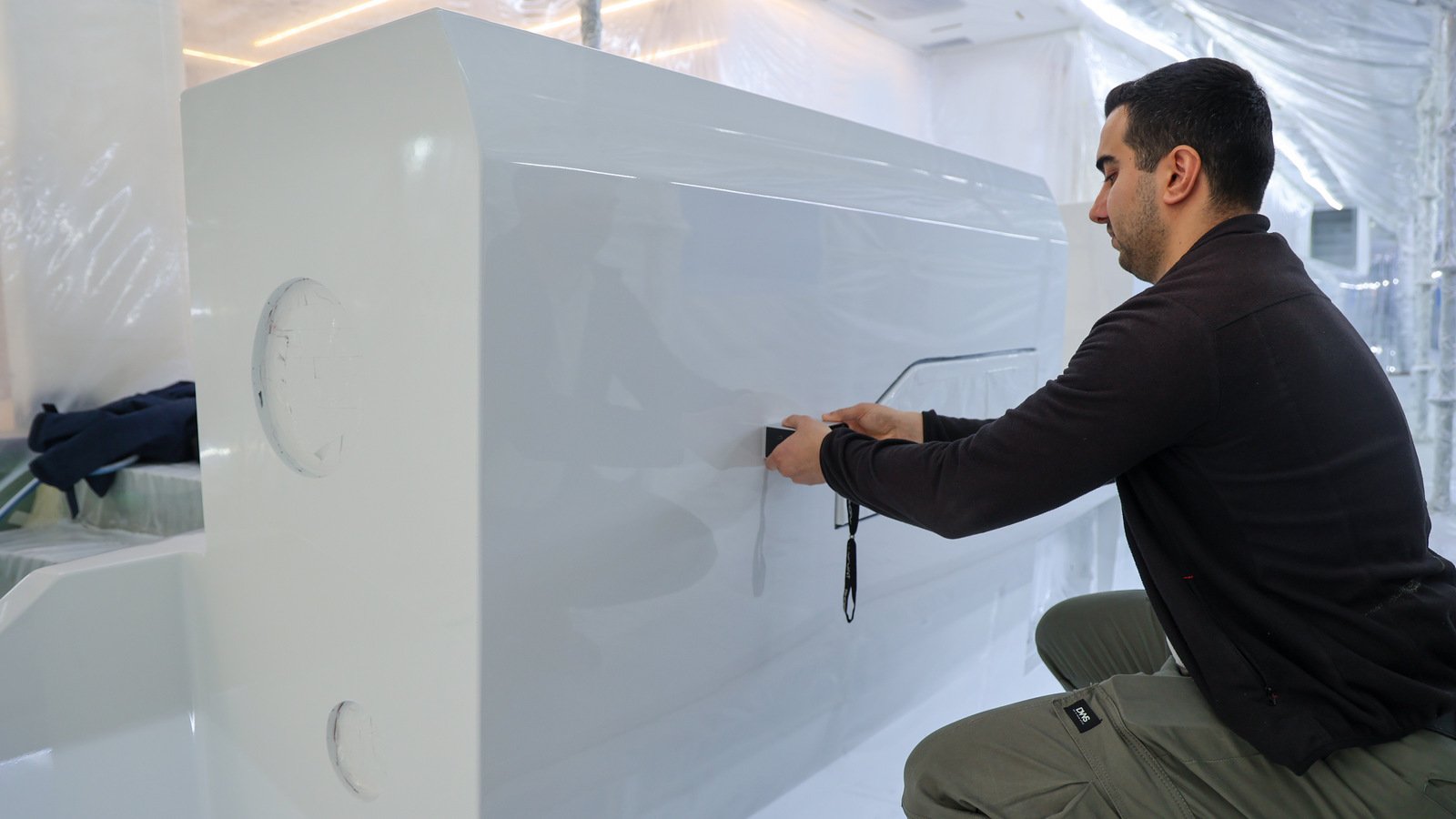
A refit and an insured yacht damage repair look identical from the quay. Same yacht, same staging, same trades walking up the same stairway. They are not the same kind of yard period, and running the second like the first costs an owner money nobody meant to spend.
A refit is priced from the owner's brief. He says what he wants, we say what it takes, and the scope is settled between two parties who want the same thing. A casualty repair is priced against a scope that a loss adjuster and an attending marine surveyor have agreed, and more than two parties are in the room. The whole discipline of it is holding one line: reinstatement, which is the underwriter's account, against improvement, which is the owner's. That line has to be drawn while the plate is open, because it cannot honestly be drawn afterwards.
Gauge and photograph before anything is cut
Gauge and photograph first. Not after the staging is up and the permit is written, and not after the first cut.
Once a compartment is faired, coated and closed, nobody can tell reinstatement from improvement. The insert plate is the same grade either way. What has gone is the evidence of what was there before: the deformation, the fracture path, the sound plate beyond it, and the corrosion that was already there and had nothing to do with the incident. A yard that closes up and then argues the boundary is arguing about something a camera and a gauge could have settled in an afternoon.
So ultrasonic readings across the damaged area and well outside it, photographed with the probe in frame. The ones taken outside the damage matter most, because they are what shows where the incident stops and ordinary wastage starts. What that costs is a day. What it saves is the delay an unevidenced claim runs into before it settles. Whatever is gathered goes to the owner's manager as one file, not as attachments to a chain of emails, because the adjuster will read it months after the compartment is shut.
The premise differs from ordinary wastage work. How a renewal boundary is agreed with class from a wastage premise, and why doublers are refused, is set out in yacht steel repair in Turkey. What changes is who stands there when the line is drawn, and what the line is for.
One walk with the surveyor and the adjuster
Get the renewal boundary agreed with the attending surveyor and the adjuster in the same walk.
Two walks produce two boundaries, and the gap is a strip of steel nobody has agreed to pay for. The surveyor is asking whether the structure is fit and what class will accept. The adjuster is asking what the policy answers for. Those are different questions, and they should be put in front of the same open plate on the same morning, with the yard present and writing it down.
What comes out is one marked-up drawing initialled by both. Where they disagree, it is recorded on the day, initialled as a disagreement, so it can be priced as one rather than argued later.
Two scopes, two sets of paper, one programme
Almost every casualty attracts owner's work. She is out, she is open, the access is already paid for, and a sensible owner will want the tank coated while there is a way into it. The instinct is right. It must not touch the casualty scope.
So we run them as two work packages: two scope documents, two sets of variation paper, two cost records, two photographic files, on one programme, with one manager sequencing the labour so neither package queues behind the other. The commercial basis usually differs as well, casualty steel sitting on rate and remeasure while the owner's package can be a lump, and the difference between those instruments is set out in what a yacht refit costs.
Refusing an owner's improvement item into the casualty scope is a service to the owner, not an obstruction. A contaminated claim is a slower claim. An adjuster who finds one line on the casualty account that plainly belongs to the owner will go back through every other line, and nothing moves while he does. We would rather have the awkward conversation in week one than watch an owner's money sit behind that.
Betterment is the honest word
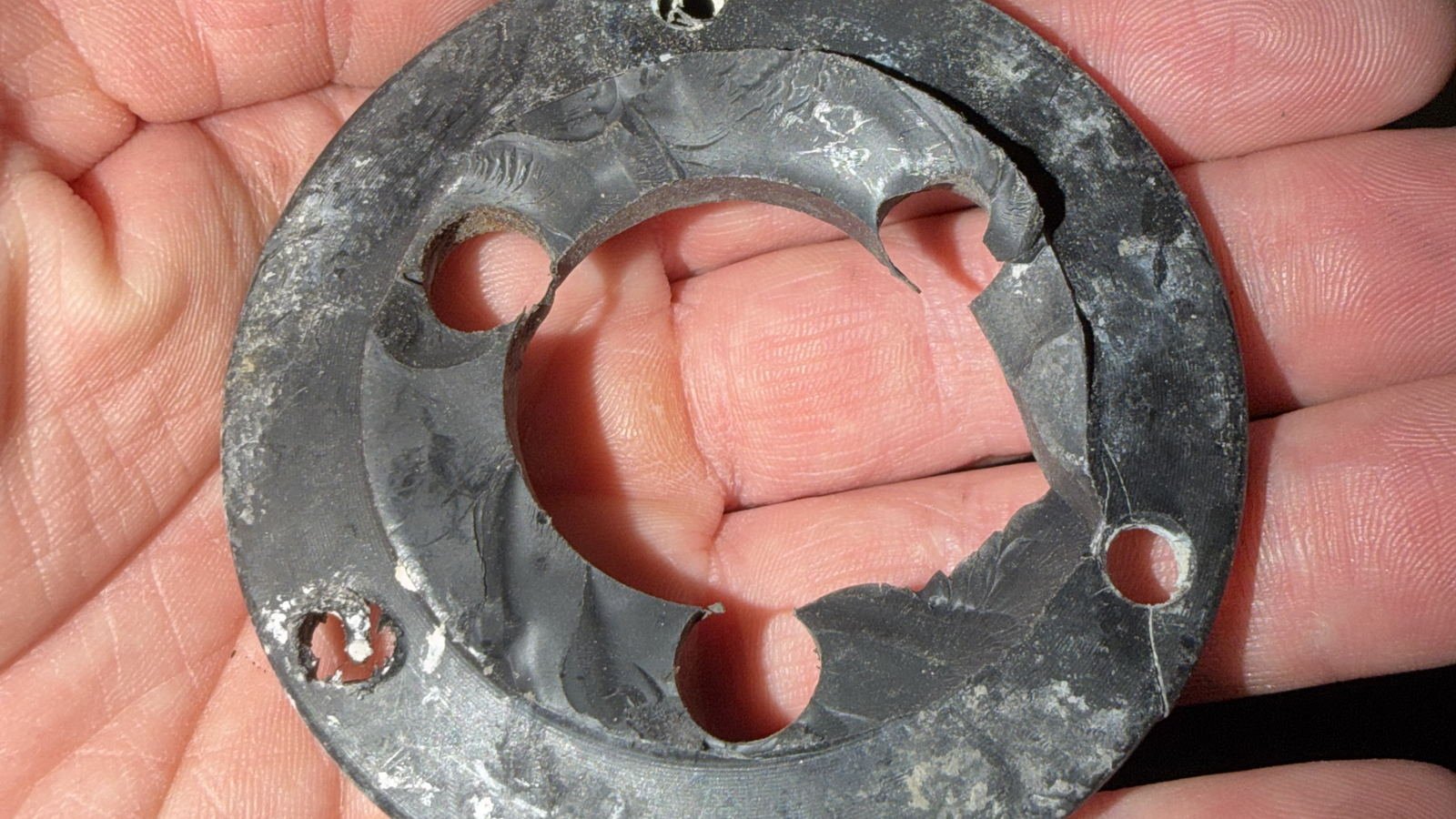
Betterment is what the owner pays when the repair leaves her better than the incident found her. Say it plainly and early.
It arises constantly, and not because anybody is being difficult. A twenty-year-old panel cannot be reinstated in twenty-year-old plate. A discontinued pump is replaced by the current model. Coating is renewed to a specification that did not exist when she was built. In each case the owner ends with something worth more than he had on the morning of the incident, and that difference is properly his.
Where the improvement element can be separated, we price it as its own line, so the owner sees a number he can decline rather than a share of a total. An owner told about betterment at the quotation understands it. An owner told about it in the final account believes the yard invented it to close a gap.
How an insured damage repair shipyard fixes a date
A casualty is an open-ended problem until it has a date, and a date is the one thing the owner, the manager and the underwriter all want.
What produces a date is proximity. The plate, the coded welders and the class attendance a casualty needs are all inside the Tuzla district, for the reasons set out in the Tuzla supply chain, so the plate, the welding and the class attendance a programme depends on are not coming from outside the district.
Our own part is ordinary enough to list. Eleven in-house workshops on one payroll, so the steel, pipework, paint and joinery behind a repair are not four firms with four calendars. RINA-certified welders. Naval architecture in-house, which matters when class asks for a calculation before it will accept a structural repair. And Stage One ends with a written condition report, an approved scope and a price that does not move, which is close to word for word what an adjuster asks for.
What we decide and what we do not
We do not decide what is covered. Cover is between the owner, the broker and the underwriter, and a yard with an opinion on it has an opinion on a document it has not read. Our part is the record and the weld: readings, photographs, a scope that says what was done and why. Cover during the yard period itself, meaning hot work permits, fire watch and ship repairer's liability, is a separate subject and sits in refit insurance and liability.
We will also say when the evidence is thin. If she arrives already faired and coated over the damage, the boundary is argument rather than record, and saying so is better for the owner than a number we cannot defend.
Written at the yard in Tuzla. What any particular policy covers is between the owner, the broker and the underwriter, and is not ours to state.
Send the survey report and the photographs
If she has taken damage, the useful first documents are the attending surveyor's report, whatever photographs were taken before anything was cleaned up or cut, and the name of the adjuster if one has been appointed. Add her class status and the dates she must be back in service. What comes back is where we would expect the renewal boundary to fall, which items we would put on the owner's account as betterment rather than on the claim, and what we would want agreed in a single walk with the surveyor and the adjuster before a torch is struck. Send it to info@revivarefit.com.
START A REFIT