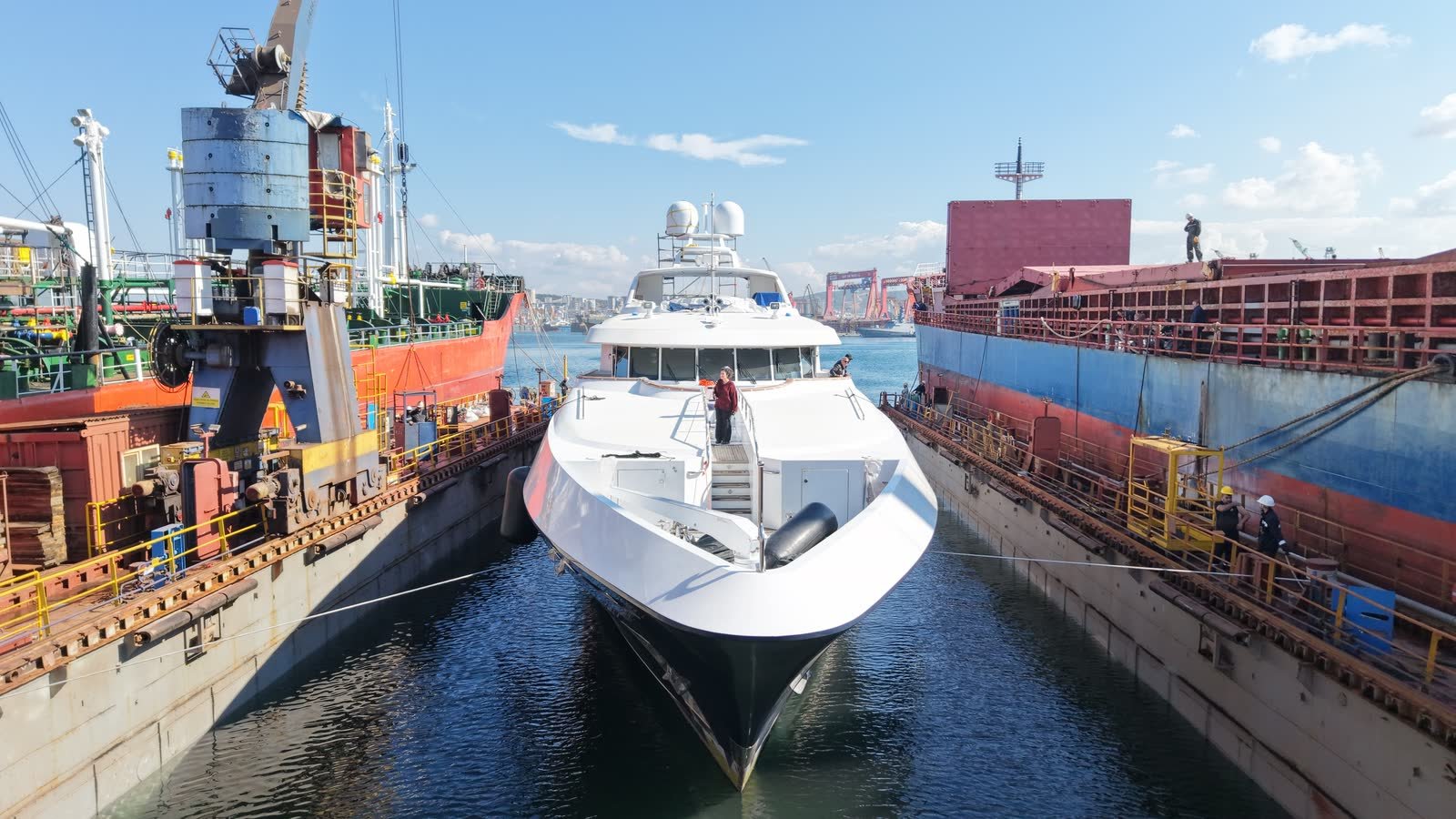
A refit hub is not measured in sheds. It is measured in how many separate journeys a part makes, and in what happens when one comes back wrong. What the Tuzla shipyard district gives a yacht refit in Turkey is not a lower rate. It is fabrication done within a short drive of the quay, and what cannot be made here is known before the survey closes.
Where the yard ends and the district begins
A refit hub is not measured in sheds. It is measured in how many separate journeys a part makes, and in what happens when one comes back wrong. What the Tuzla shipyard district gives a yacht refit in Turkey is not a lower rate. It is fabrication done within a short drive of the quay, and what cannot be made here is known before the survey closes.
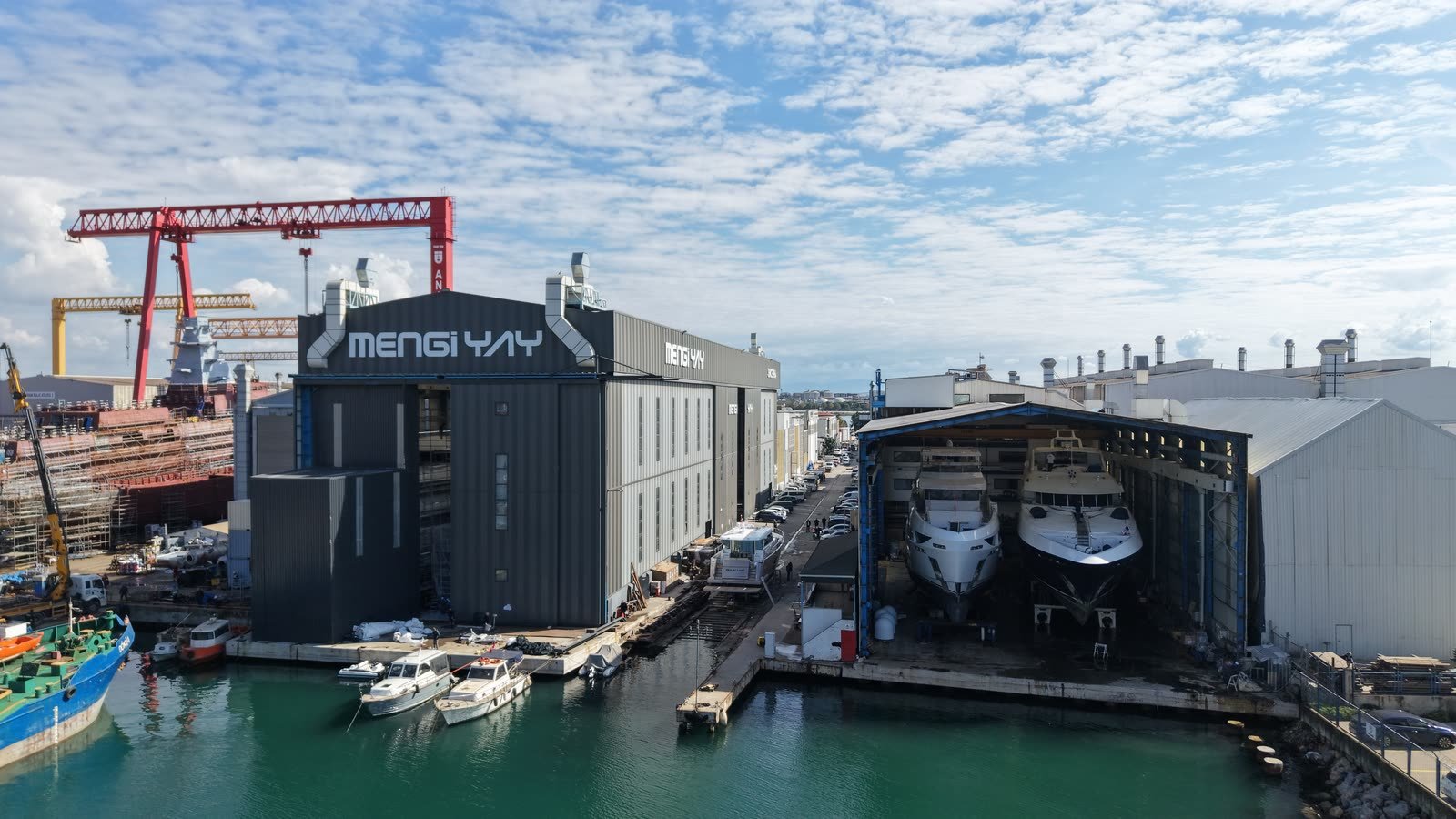
The fence is not the boundary of a refit. Our ground here is 20,000 m² of covered and open yard, and that is the fixed part. The variable part is the yard road outside it, and the Tuzla shipyard district that road runs through.
Whether a shaft or a length of stainless can leave in the morning and be back on the bench that afternoon decides more than any list of suppliers does. A shed is not a boast, it is a shorter distance, and the same measure applies outside the gate. What counts is not how much of this waterfront is ours, but how many times a part has to be carried before it fits.
The head yard stands on Tersaneler Caddesi, with berthing at Viaport Marina alongside it, a dry dock at Pendik and hull and steel work at Yalova. Parts move between those addresses on the same roads a supplier uses.
What lead time costs a programme
How many weeks a refit runs is a question about scope, and it is answered in how long a yacht refit takes. Given a programme already agreed, the variable that decides whether it holds is rarely the hourly rate. It is how long a part takes to arrive.
Take the structure band, weeks one to six of the rebuild programme. Suppose a procurement cycle of four weeks set against it. The order eats two thirds of the float that band was given.
Do that twice in one compartment and joinery moves, and behind joinery stand fairing and paint, then rig and deck, then commissioning. None of it is recovered by working faster. It is recovered by ordering earlier, or by making the part nearby.
What never leaves the fence
The eleven workshops here run on one payroll and one programme: carpentry, interior joinery, metal works, painting, electrical, mechanical, engineering, piping, AC repairs, outfitting and anti-fouling. Nothing is subcontracted out of sight. The list matters less than what it removes, which is a queue and a second lead time.
Three of those trades take the fabrication a refit generates once the compartments are open. Metal works cuts and welds plating, frames, tanks and hardware. Piping makes up fuel, water and waste runs. Mechanical deals with engines, shafts and alignment.
Each works from a measurement taken off the yacht rather than from a drawing sent out, so the part is made against the thing it has to fit, and remade against the same thing if it does not. The shortest supply chain in a refit ends at a bench inside the same fence.
The sub-industry within a short drive
Outside the gate, on the same stretch of waterfront, sit the sub-industries the Tuzla shipyard district puts around a refit. Machining and turning. Propeller and shaft work, including straightening, balancing and tail shaft machining. Foundry work, plating and chrome.
Behind those sit the supply houses. Stainless and aluminium fabrication. Hydraulics and marine electrics. Timber and upholstery, coatings, rope and rigging, and spares agents for the common machinery brands.
None of that is the yard handing a scope to someone else. It is buying a machining operation to a drawing our own trade produced, and taking it back to our own bench to fit. We name no firms, because the category is the useful unit, and why so much of this sits on one shoreline is taken apart in what the Tuzla cranes were built for.
A part measured off the yacht and machined locally can be offered up, found undersized or wrong-handed, and go back to the same bench with the yacht still open in front of it. The same error against a supplier abroad restarts a procurement cycle, and the compartment stays open while it runs. Density does not prevent the error. It takes the freight leg out of the correction.
What has to cross a border
The honest half is what the district does not supply. Proprietary OEM assemblies come from the manufacturer or not at all. Warranty-bound electronics and control systems arrive sealed, with a serial number and a commissioning engineer attached. Brand-specified coating batches, and anything whose certification is tied to a single maker, are freighted into Istanbul and cleared before they reach the quay.
That is a different customs object from the yacht herself, whose passage and clearance are set out in temporary importation and the passage out. Goods are the simpler case. The consequence is a sequencing rule rather than a complaint.
Long-lead items that cross a border are ordered at the close of survey, before the design is finished, because the design will not change the part number. A stabiliser actuator or a switchboard ordered at design sign-off has already spent the float the programme gave it. We would rather hold a crated item in the store while the trades work around it than hold a compartment open waiting for it to clear.
How a survey becomes a buy list
The survey takes two to four weeks, and one of the things it produces is an order. Two hundred and forty ultrasonic points give a steel quantity. Pipe runs opened give a metre count and a fitting schedule. Cable pulled out gives the length of the loom that replaces it, and the area faired gives the litres of coating.
Each of those has a different source and a different clock. Steel and stainless are stocked and cut locally. Cable is a stocked commodity. A specified topcoat in a specified batch is neither.
That is what purchasing works to here, and why the order goes in against the survey figures rather than the finished drawings. The part is on the shelf before the trade needs it, or the trade waits.
Certification narrows the list again. Where class requires traceable material, only suppliers who send the paperwork with the goods are usable, and that is a smaller set.
Three questions that test a supply claim
The general questions worth asking any yard are set out in the seven questions a shortlist cannot answer from the quay. These three are the supply ones. Any yard in Turkey will say it has good supplier relationships, and the sentence carries no information. Your own work list does, with three columns added: where each item comes from, how long it takes to arrive, and which trade stops if it is late.
Then ask about the remake route. If a machined item comes back out of tolerance, who makes the second one, where, and in how many days. A yard that cannot answer is describing a catalogue rather than a district.
Then ask who holds the order. If the yard places it, the yard owns the date. If the owner places it, the date is the owner's, and so is the week the compartment stays open. Only one of those can be managed from inside the fence.
Written at the yard in Tuzla. The programme weeks and the trades named here are the ones our own purchasing works to.
Send the parts list before the specification
The document we can act on first is not the specification. Send the work list with the long-lead items marked, so those orders can be placed against the survey rather than against the drawings. Send the equipment schedule with makes, models and serial numbers for main engines, generators, stabilisers, switchboards and air conditioning, because a part number is what a spares agent answers to. Tell us what is owner-supplied and where it is coming from, and name any coating or system brand that cannot be substituted. Send it to info@revivarefit.com.
SEND THE PARTS LIST