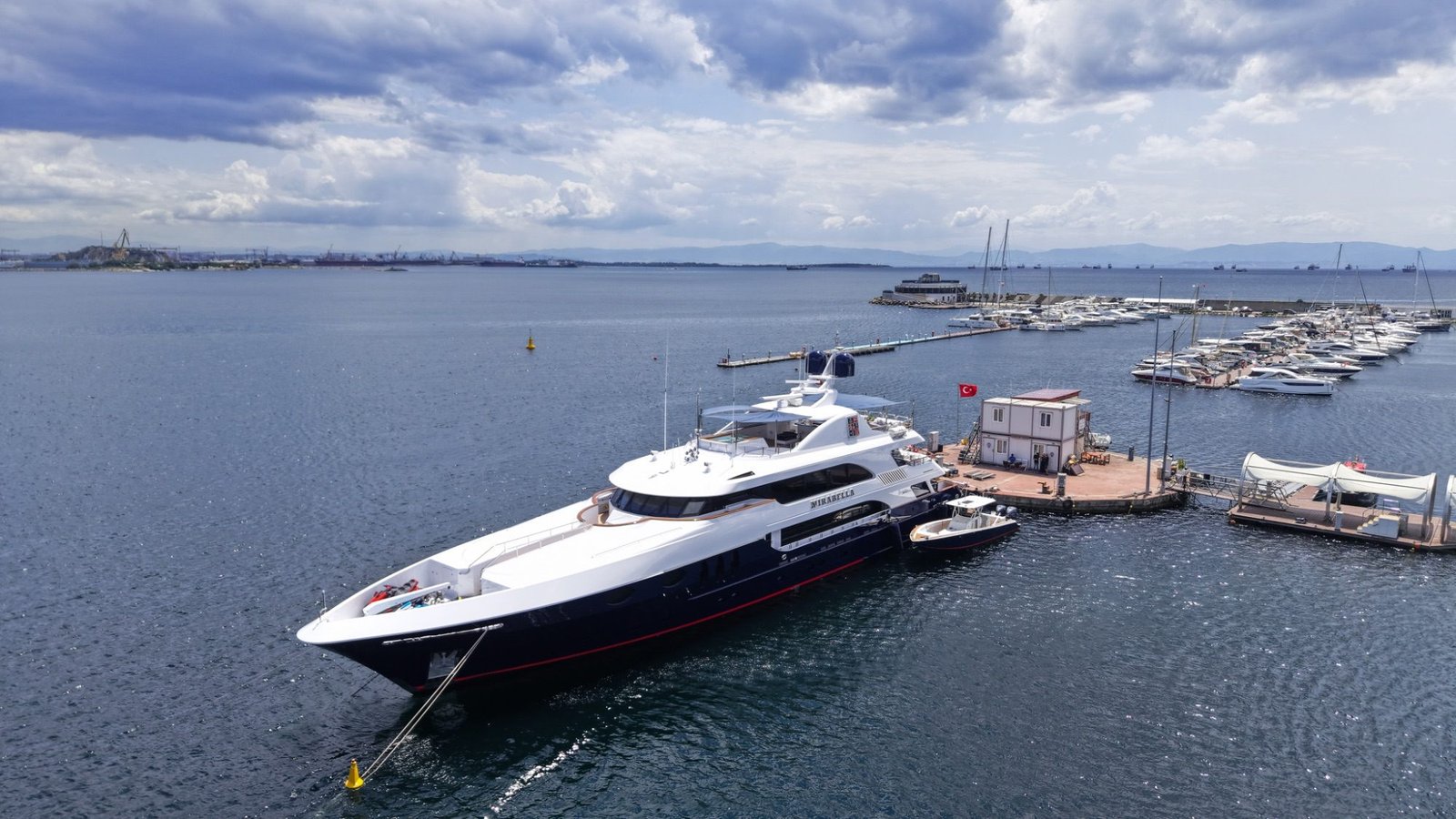
A note on the commercial shipbuilding hardware a yacht yard inherits in Tuzla, what that hardware decides on its own, and what it still cannot do.
The hardware a Tuzla shipyard inherits
A refit yard is inherited before it is chosen. The quay walls, the crane rails, the depth at the sill and the clear width of the hall doors were built for something else, decades ago, by people who were not thinking about yachts.
The case for yacht refit Turkey is usually made on cost, and cost is the least interesting part of it. What sits behind the price is commercial shipbuilding capacity, built for tugs, chemical carriers and offshore supply vessels, now pointed at a different kind of hull. That inheritance decides what a Tuzla shipyard can do.
Crane reach and rated lift decide whether a main engine comes out in one piece or in sections, and depth at the sill decides which vessels float in at all. The binding constraint is rarely tonnage. It is clear width between the lift legs. Commercial hulls were narrow for their length, modern yacht hull forms are not, and beam stops a haul-out that a tonnage figure would have allowed.
What a covered hall is for
A hall is a climate before it is a building. Substrate temperature held above dew point, for the hours a coat actually needs, separates a paint programme that runs in February from one that waits for April. Covered space is sold as shelter. What it is is season.
Under that roof the expensive work is not spraying. Fairing is bought in longboard hours rather than in tins of compound, which makes it the most labour-sensitive line in a quotation. It is checked with battens and a light held low. A hall long enough for the whole vessel means fairing and topcoat happen once, not in two campaigns with a joint that a batten will find.
The trades were already here
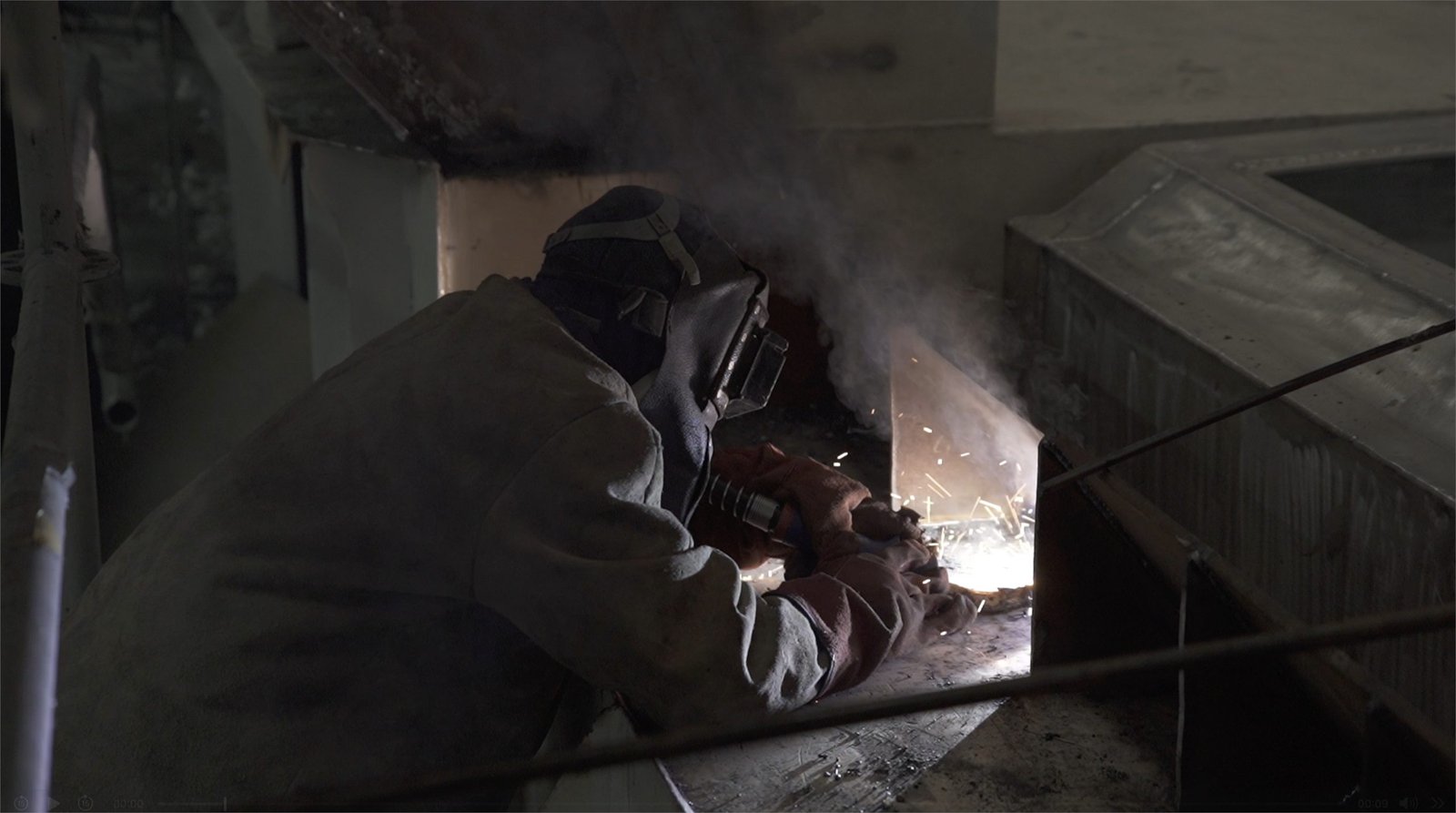
Infrastructure without trades is a car park with a crane on it. Tuzla was a commercial yard district long before it was a refit district, and tank barges, tugs and chemical carriers built a population of coded welders, platers, pipe fitters and machinists living within a few kilometres of the water. A Tuzla shipyard does not import a welding crew for a steel job. It hires one that lives in the district. That is why a Turkish shipyard refit can staff a large steel or aluminium job in days rather than weeks.
The joinery bench came from somewhere else. Turkey has a large furniture industry, and the interior trades here are staffed out of it rather than shipbuilding. It shows in veneer matching, in lacquer schedules and in making a panel meet another panel without a shadow line. A furniture joiner is also used to a stable room, and a panel fitted flat in a dry shed can bind after a season in the Aegean.
Density is the rest of it. A propeller shop, a chrome shop and a hydraulics workshop can be visited and chased on the same day. It also means a good sprayer can be hired away mid-programme, and a hull faired by one crew and finished by another shows it.
What the arrangement buys
Reviva holds its metal, paint and joinery trades on its own books rather than assembling them per project. That is an answer to the variance in a district this deep, not a denial of it. None of what follows is a claim about skill. Each is a claim about arrangement, and arrangement decides what the hours actually are.
- Parallel trades rather than sequential ones. Covered space and workshop capacity let metal, paint, joinery and electrical run at the same time, and a plate or a bracket is cut and fitted on the same site rather than trucked in. Work that queues behind other work is what turns a winter into a summer.
- Purchasing, customs and freight held by the yard. A vessel under temporary importation needs a broker who understands that regime, and bonded storage inside the same fence. An import delay is invisible until a trade stands at the work with nothing to fit.
- One manager answerable for the whole vessel. Not for a department, because every boundary between departments is where a fortnight goes missing and nobody records it.
A yard inherits its geometry. It does not inherit its standard.
Where the coast sits
Geography is real and it is second order. Tuzla sits at the eastern end of the Sea of Marmara, and the delivery passage from the western Mediterranean runs Marmara, Dardanelles, Aegean, Ionian, counted in days each way with fuel, crew time and insurance against every one of them. None of it appears in the quotation.
Most of the yacht refitting Tuzla takes on is therefore winter work, booked in autumn. A vessel that stops cruising in October and is wanted in May has the months a full coating and steel programme needs. The argument for yacht repair Turkey is strongest where the work needs steel, machinery, scaffolding and time. It is weakest where it needs one part flown in overnight.
What is given up
The honest account for an owner weighing superyacht refit Turkey against a northern yard has five parts, and only one is usually raised.
Distance. An owner's representative cannot call in on a Tuesday afternoon, which changes what the yard owes them in writing rather than in person: photographs each week, and findings recorded on the day the plate is opened. That is not a courtesy. It is what distance obliges a yard to produce.
Documentation is the second. Class correspondence, warranty registration, technical files and coating records have to be produced in a second language, to a standard the next yard can read.
Attendance is the third. Service engineers for proprietary systems sit in Italy, Germany or the Netherlands and travel on their own timetable, so a decision that would take an afternoon in Viareggio takes a week here. European equipment reaches Tuzla later than it reaches La Ciotat, so long lead items are ordered against the programme, not against a catalogue.
Size is the fourth. Above a certain length and beam the number of yards anywhere that can take her is small, and the choice stops being a market and becomes a list.
The fifth is harder to write down. A yard grown out of commercial repair carries commercial habits. A weld that is sound on a tank barge can be unacceptable under a yacht topside, because the standard there is not strength alone but what the fairing has to hide afterwards. A finish that passes on a workboat does not pass on a topcoat read from fifty centimetres with a light held low. Holding a yacht standard inside an industrial yard is a management problem before it is a skills problem, and it is not solved once.
Practically: the questions worth putting to any Tuzla shipyard are physical ones. Ask for the lift chart with clear width as well as rated tonnage, the depth at the sill and the air draught. Then ask what was done the last time a vessel exceeded one of them. Ask for the survey methodology before the price, because a thickness map positioned by station and frame changes what a steel line in a quotation is worth. A yard unwilling to produce any of it should be compared on price alone and declined. Written at the yard in Tuzla. Figures quoted are the ones we record on the job and hand over with the vessel.