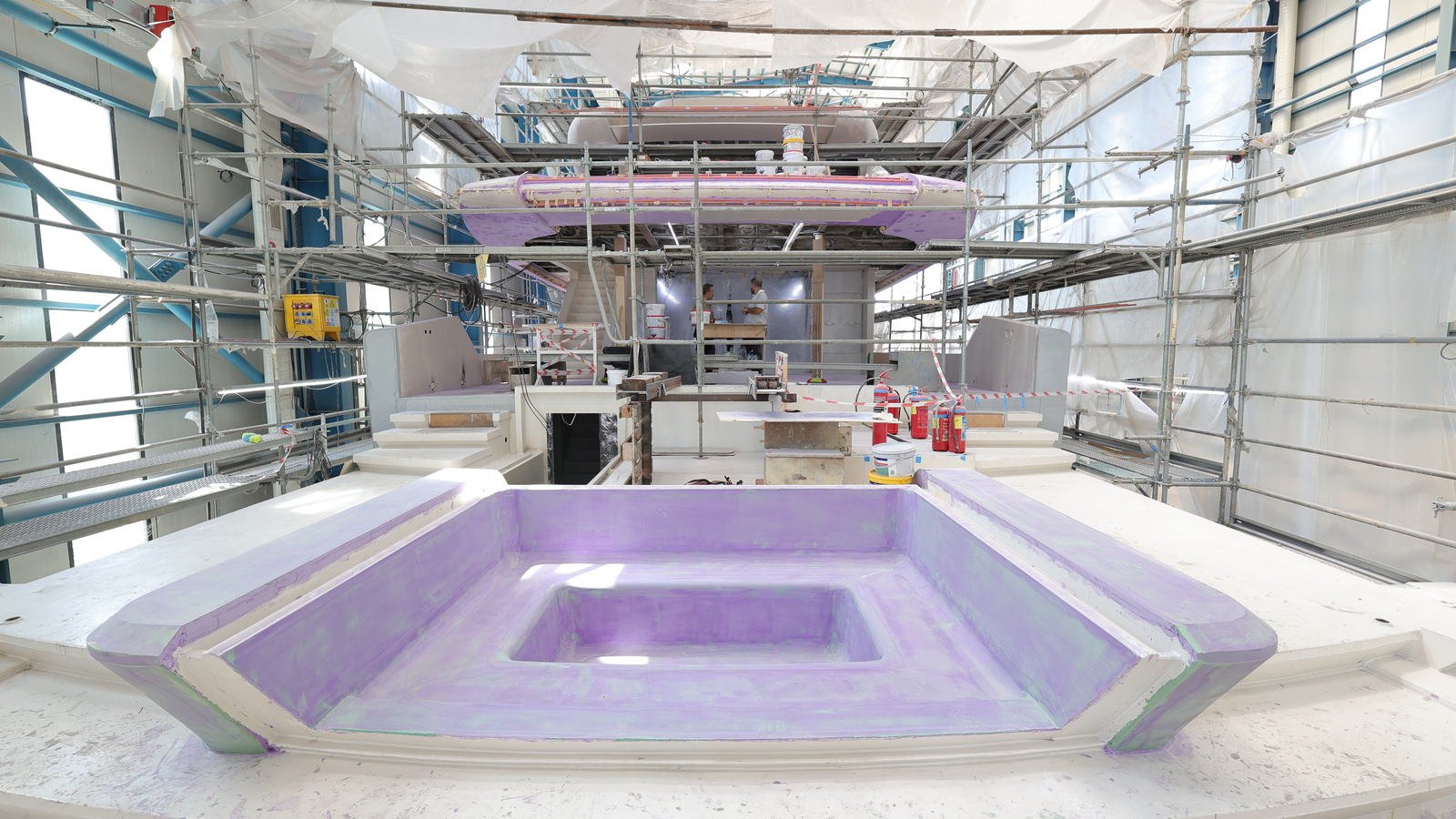
Yacht refit insurance and liability are settled before the lift or not at all. A fire watch stands for a full hour after the last spark. A detection loop isolated for welding is a change in the risk somebody priced. This is what a yard's cover reaches, and where it stops.
Yacht refit insurance and liability assume a yacht in commission
Yacht refit insurance and liability start from a vessel in commission, and the change when she comes out is factual before it is contractual. She is on blocks, her propulsion is disabled, and the people with reason to be aboard on any given day are not her crew and are not the same from one week to the next.
Hull and machinery cover is written around a vessel afloat, manned and in use. Some wordings cover her ashore without a word being said. Others carry conditions or warranties that only bite during a repair period. Which of those a policy is, is settled by reading it, before the lift rather than after a loss.
Ship repairer's liability, and the four things it does not reach
A yard carries ship repairer's liability in respect of vessels in its care, custody and control. It answers where the yard is legally liable, up to a stated limit for any one occurrence and often an aggregate for the year.
Four things it does not reach. It is not insurance on the yacht, so a peril where nobody was at fault does not touch it. Typical wordings exclude making good the yard's own defective work while covering the damage that work does to the rest of her, so the two halves of a bad weld are answered by two different instruments, the first our twelve-month workmanship warranty. The limit can be a fraction of a large yacht's value, and a loss above it is not insured. What happens to it then is a question about our terms of business rather than our policy, and those terms cap liability further, so they are read before signing.
A fire that starts elsewhere on this waterfront is not a claim anyone settles from the quay, and where it finally lands is for underwriters and their lawyers rather than for a yard's journal.
Somebody has to tell the underwriter, and it is not the yard
The owner or the manager tells the broker, in writing, and we supply the detail: the yard's name and address, the dates, whether she lies afloat or ashore, whether hot work is in scope, and whether crew will be aboard. If she moves between our sites during the period, that is a movement the cover has to reach.
Underwriters commonly attach conditions to a repair period, and a condition carries a date of its own. A pre-work survey has to be booked before the staging goes up and hides the hull. Months ashore away from her home water, of the kind set out in why northern hulls winter in Tuzla, sharpen the question rather than soften it.
A yard that tells an owner the underwriter need not be told is wrong. A policy that was never endorsed for the period ashore can be avoided in full, and the loss is then not reduced but uninsured.
Hot work is the fire, and a permit is what stands in front of it
Most serious refit fires begin as work somebody was doing on purpose. One written permit for one task, one compartment and one shift, issued by somebody who is not doing the work. An atmosphere check with a calibrated meter before it opens, and tank and fuel line work only behind a gas-free certificate, measured and signed by somebody independent of the trade doing the work.
Combustibles cleared to a stated radius, and the space behind the bulkhead checked, because steel conducts and the fire starts in lagging nobody lifted. A fire watch equipped and doing nothing else, held through the work and for a full hour after the last spark, with a further check on structure that holds heat. The same permit book carries entry to tanks, voids and cofferdams, with the atmosphere tested before entry and again on re-entry, and somebody at the opening who does not go in.
Inside a covered hall the fire watch has a bounded space with known exits and a hose run of known length, and she takes no sparks off work that is not hers.
Her own fire protection is off while the work is on
Detection loops are isolated against dust and welding, and fixed suppression is disabled or its release lines pinned while the machinery space is worked in, alongside the systems work set out in the engine room and systems refit. Ashore on blocks the bilge alarms follow the systems and the batteries come off the charger. Afloat they do not, because a hull in the water keeps bilge alarms and a charged bank whatever else is isolated, and an underwriter's repair-period condition usually asks for exactly that.
Something has to stand in: temporary smoke detection in the accommodation, charged hoses reaching every work face, extinguishers at the face rather than a rack forward, and a patrol overnight. An isolated loop is a change in the risk somebody priced, so the isolation register is a document the broker may ask to see rather than a yard schedule.
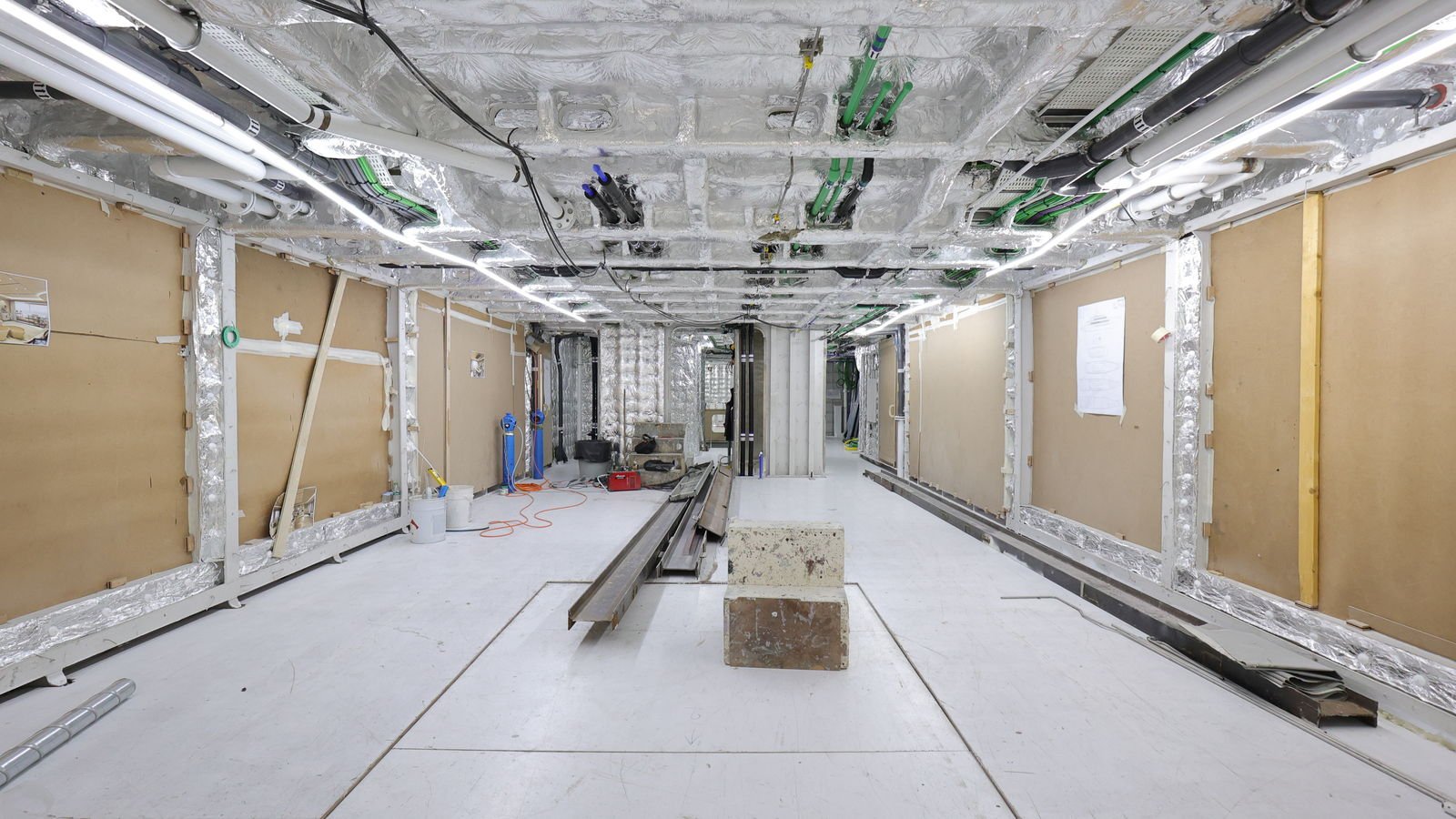
An open hull, an open gate
Staging is a stairway and a cut shell plate is a door. We ask for named contractor lists, a gate log, and keys held by one person who signs them out. Tenders, toys, artwork, electronics and loose gear are landed and inventoried at the lift, the inventory signed by both sides and the store named on the terms of business, so both sides know whether it sits under our cover or under hers.
Contractors an owner brings in should carry their own liability cover, and we ask to see the certificate before the gate pass is issued, because cover has to exist before it is needed rather than be looked for afterwards.
Who is awake at three in the morning
Whether crew live aboard through the disruptive weeks is the owner's decision with the manager, and an underwriter usually attaches something to it, so it is asked before the lift rather than assumed.
What does not move ashore with them is watchkeeping. Our night patrol is a yard patrol rather than the yacht's watch, and the two alarms are reconciled on paper before the first permit, with a roll call that works in Turkish and English. What the yard needs is one name, reachable at night, who can make a decision about the vessel.
The papers to have before she is lifted
Yacht refit insurance and liability come down to a short list of documents held before she is lifted, and the half worth listing here is the owner's. Written confirmation from the broker that hull cover is endorsed for the period ashore and for the hot work in scope. The contractor list with each certificate attached. The signed landing inventory.
Photographs taken on the day she comes out of the water settle more arguments than a clause does. The lift is a recorded operation here, and she is photographed on the slings before she is set down, in the bay described in a wider bay for the travel lift.
Written at the yard in Tuzla. The permits, patrols and papers named here are the ones this yard issues and hands over.
What to send before she is lifted
Send her length, material and year, the dates you want ashore, and whether she will lie afloat or on the hard. Tell us whether hot work is expected in the scope, whether crew intend to live aboard, and who is named as the decision-maker at night. What comes back is a written description of the permit system, the fire watch standing time, and a list of the papers we will want from your side before she comes out of the water, in a form you can forward to your broker before the lift rather than after it. Once we have a scope and dates from the owner or the manager, our ship repairer's liability certificate with the limit stated and our terms of business with the liability clause marked go with it. What your own cover should say is your broker's to advise, not ours. Send it to info@revivarefit.com.
SEND THE DATES AND SCOPE