What the ground here does not decide
Geography is the easiest part of this decision to check and the least likely to settle it. Yards on the Tuzla waterfront share a district and a labour pool, and that inheritance is a separate subject.
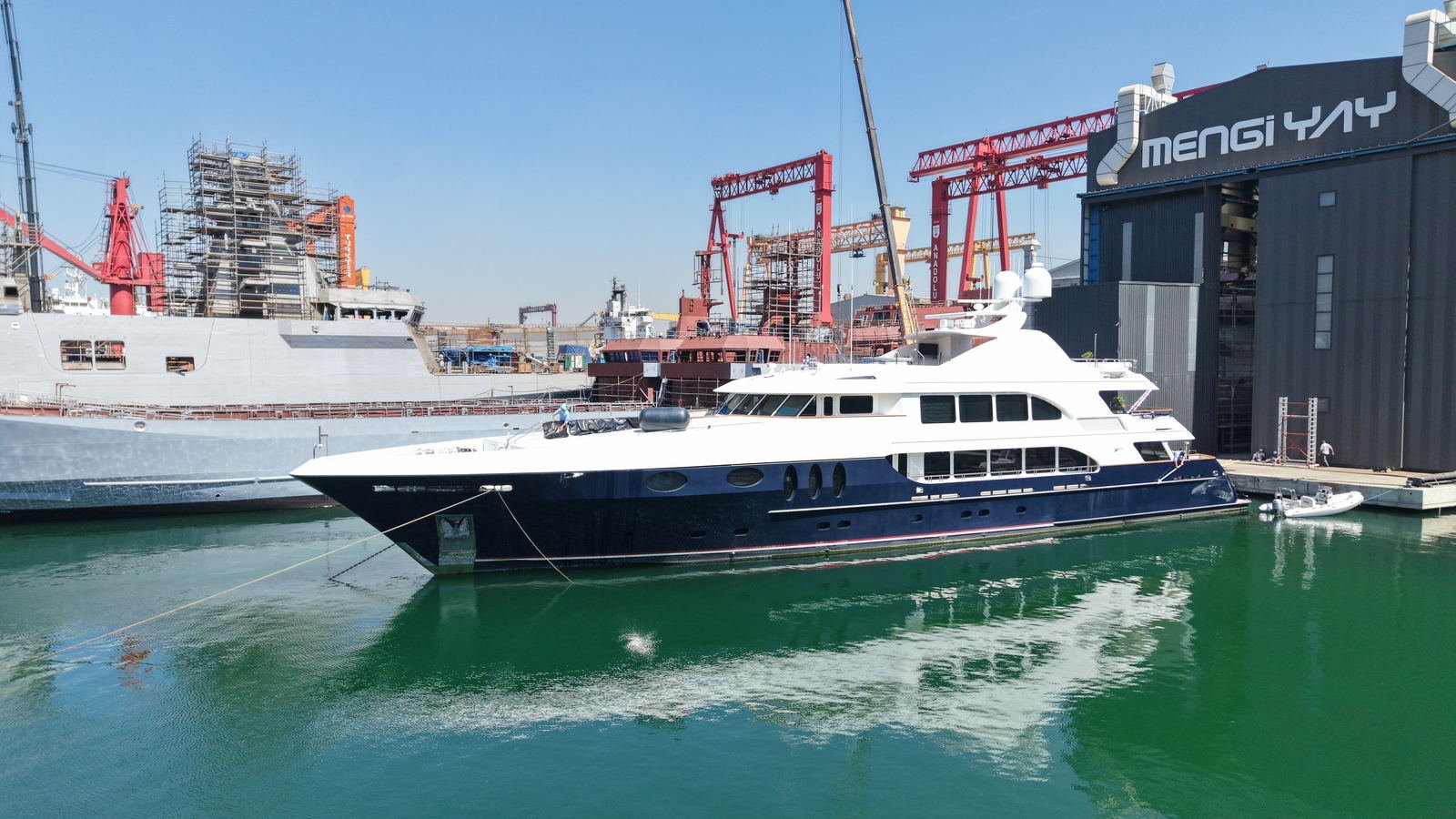
What an owner is deciding is who holds the people who will work on her. A refit yard can assemble a project out of firms, or it can employ the trades. Reviva is the second: eleven workshops, every trade in them on the payroll, one company answerable when the seams go wrong.
Eleven in-house workshops on one payroll
Carpentry. Interior joinery. Metal works in steel and stainless, with RINA-certified welders. Painting, electrical, mechanical, engineering, piping, AC repairs, outfitting, anti-fouling. Nothing on that list is bought in.
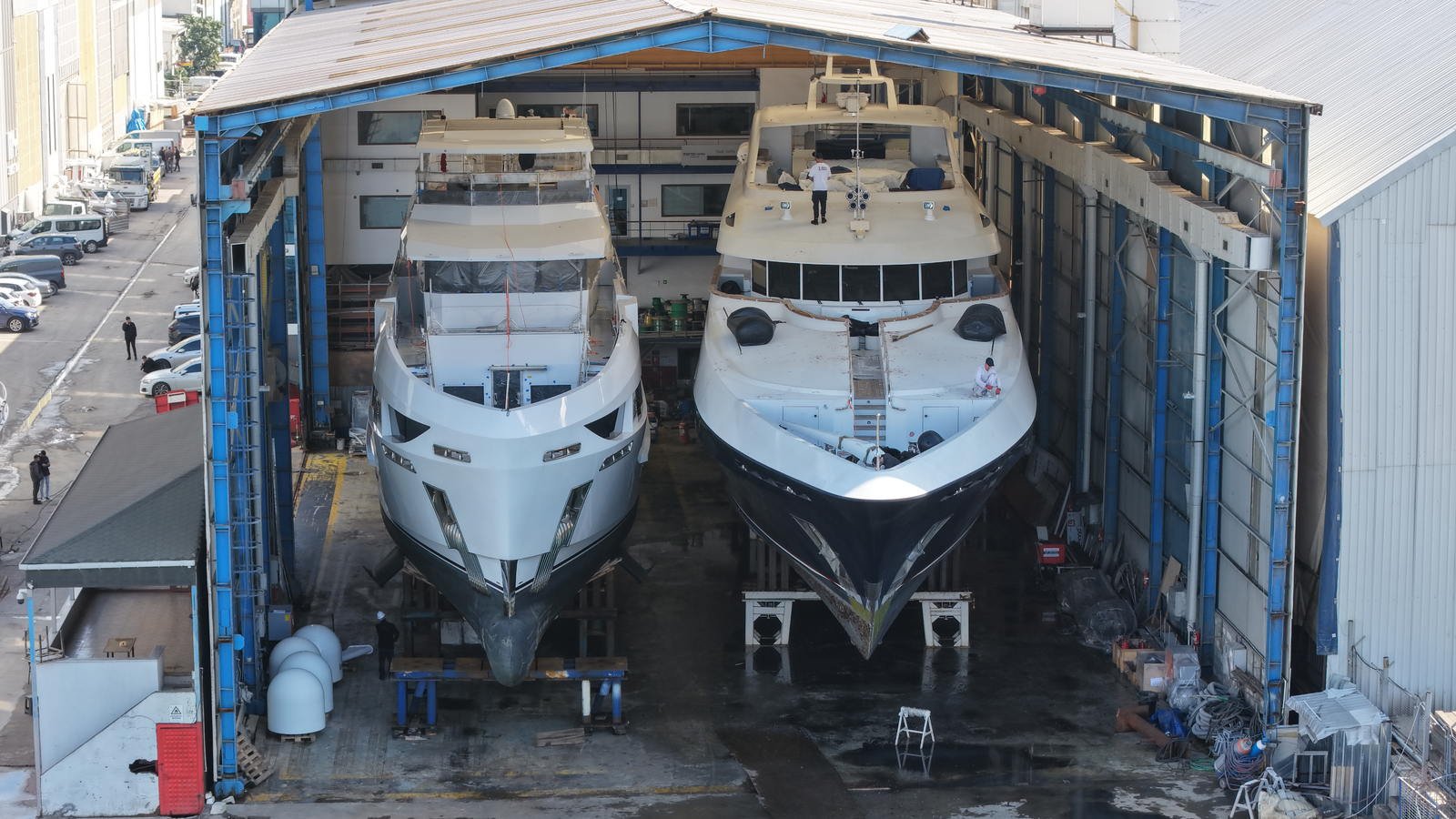
The effect is on the labour schedule rather than the invoice, and it shows first at the seams. A rudder bearing at 1.9 mm against 0.8 mm as built is a machining job, a fitting job and possibly a steel job: found by one department, paid for across three. A joinery panel that will not close over a pipe run is, inside one company, an argument on the boat between two men with the same manager. Between two firms it is correspondence, and the compartment stands closed while the letters travel.
In-house workshops do not remove that collision; they remove the invoice attached to resolving it.
The order of work shows it: structure weeks one to six, systems eight to eighteen, electrical ten to twenty-two, joinery sixteen to twenty-eight. Four of those bands are open at once in week eighteen, aboard together because they are employed together.
The arrangement has a cost. Standing workshops carry trades through the months they have little to do, and the yard carries that itself. It also cannot swap a department out mid-programme. It has to put it right.
One manager, and the paperwork
A vessel in a Turkish refit yard is usually a long way from the office of the person paying for her, and distance makes an unanswered question expensive. One project manager carries her from assessment to redelivery and answers for her, including on the weeks when the answer is that nothing moved. Every Friday there is a report backed by photographs, especially when it went badly. Refit project management is a longer subject than this one.
Purchasing, freight, customs and bonded storage sit with the yard: a vessel under temporary importation needs a broker who understands that regime, and storage inside the same fence. Customs failures are only ever discovered downstream, by somebody else, in a different trade, a fortnight later. The test is whether the part is on the shelf before the trade needs it.
What a certificate certifies
ISO 9001, ISO 14001 and ISO 45001 audit whether a system exists: whether a procedure is followed on a Saturday shift as well as on an audit day, whether a document trail outlives the person who wrote it. A welder's RINA certification applies the same idea to one pair of hands. A certificate does not make a weld. It makes the weld checkable by somebody who was not there.
A refit yard in Istanbul is judged on what the next yard, the surveyor and the class society can read in its file.
The refit warranty that starts after redelivery
Handover is where most arrangements quietly end. Where the work was subcontracted, an owner who finds a fault in March is chasing a firm they never engaged.
Redelivery comes with as-built drawings; the work record indexed by compartment and date, class and material certificates and test results in it; manuals and spares lists; a two-day crew handover run by the people who did the work; and twelve months on the yard's workmanship, in plain language, with a named contact. Manufacturer warranties run in parallel, administered by the yard, which spares a captain a year of email in a second language.
That contact is the foreman who ran the refit. Most warranty work is done without bringing her back: two engineers and a case of tools at the owner's marina. At the end of the first season the yard checks her at its own cost, whether or not anything has gone wrong.
What a winter refit costs an owner ashore
An owner standing in the compartment is worth more to the programme than an owner on email, and the yard budgets for it accordingly. A question asked beside the work is answered before the trade breaks for lunch; sent as photographs, it comes back as photographs. So there is office space on site, discounted rooms at a hotel in Tuzla, and transport.
A winter refit also takes a season away from the reason the vessel was bought, a cost that appears in no quotation. A 26-metre charter yacht is part of what the yard offers owners while their own is out of the water. It does not compensate for the loss. It means the season is not written off entirely.
Yacht refit services in Turkey, in full
One fence is not literally true. The dry dock is at Pendik, hull and steel work goes to Yalova, service is at Bodrum. What holds across the four sites is the payroll: a vessel moved between them changes neither contractor nor the person answerable for her. The services, set out plainly:
- Eleven trades employed rather than engaged: workshops at Tuzla, dry dock at Pendik, hull and steel at Yalova, service at Bodrum.
- A survey with every reading located and dated, a work list priced in three tiers — must, should, want — and a schedule envelope with a named contingency.
- One project manager, one foreman per hull from strip to redelivery, a photographed report every Friday, snags closed before the sea trial.
- Purchasing, customs, freight and bonded storage held by the yard, and certified welders and systems whose evidence is handed over rather than described.
- Warranty, a named person, a flying service, a first-season check and a winter berth — all of it after the money has been paid.
None of that makes this yard right for every vessel. An owner with a working boat, a short list and a fortnight should not be reading it. Eleven standing workshops are only worth their fixed cost against a programme long enough to keep them busy.
Written at the yard in Tuzla. Figures quoted are the ones we record on the job and hand over with the vessel.
What to send before anyone quotes
The useful thing to send is not a wish list. Send the last condition survey, the class position, and one sentence about what she is for next season. What comes back should include the version where we advise against the job. Two questions are worth putting to us, and to anyone else quoting the work: who employs the person who will do the welding, and who answers the telephone in March, a year after she has gone home. Ask for the second answer as a name.
SEND A BRIEF