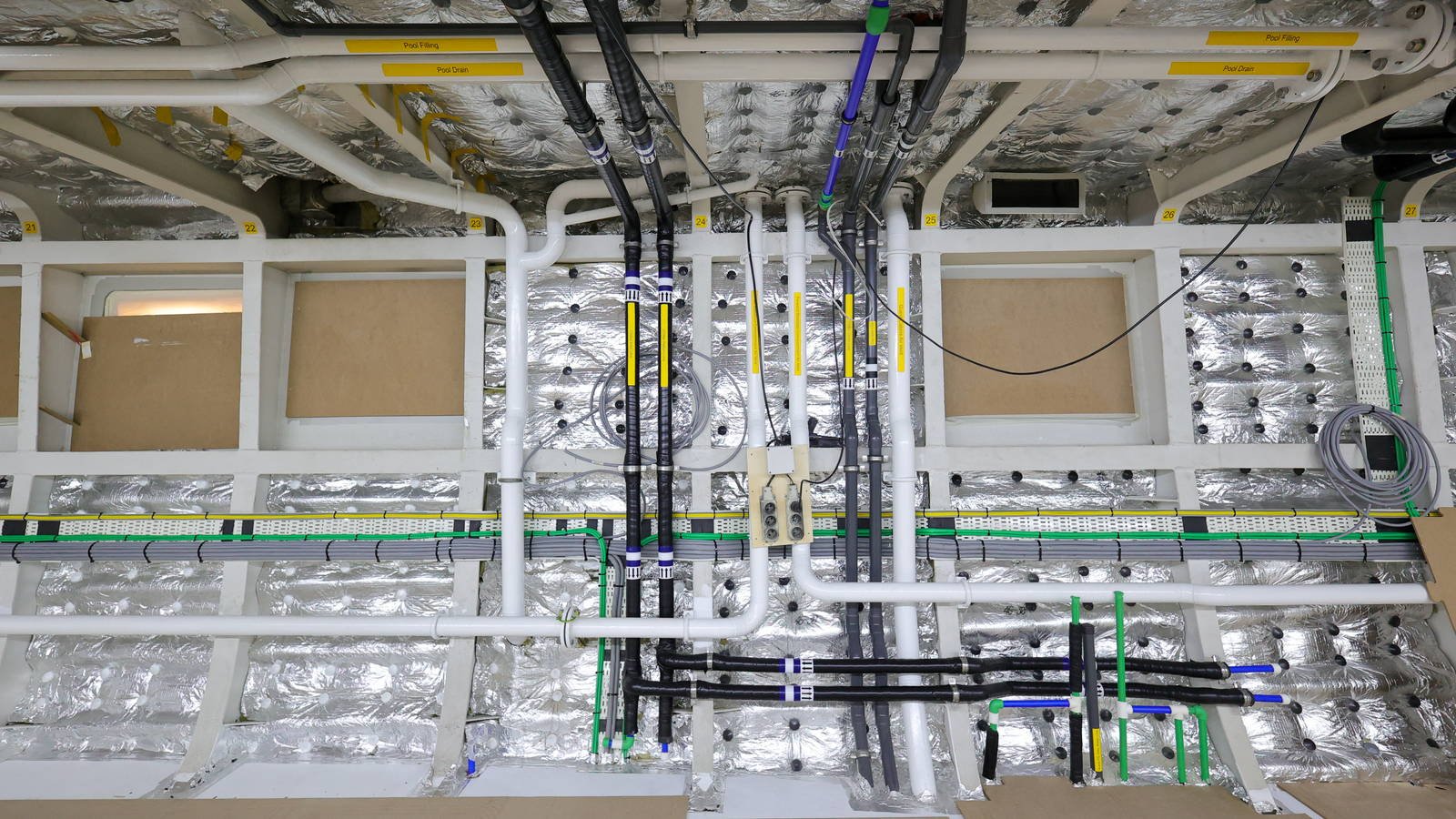
A yacht repower is not the purchase of an engine. It is the purchase of everything the engine will not accept from the vessel it lands in: the emissions tier, the exhaust run, the gearbox, the propeller and the fuel in her tanks. An overhaul in place avoids most of that list.
What is bought when the units are replaced
Whether a replacement can be landed in the space at all is a separate question, settled by the bedplate, the circuits the new units load and the route the old one takes out. Those gates are walked in what the joinery closes in. A yacht repower is bought whole, and most of what is bought is not the engine.
Which unit is a candidate for an overhaul instead is a narrower reading: hours since the last major against the interval the maker publishes for that family, with the last two oil analyses beside them. Hours decide overhaul or replace, not whether a replacement is buildable, and a removal route or a tired foundation can veto a decision the hours support.
The tier a replacement lands under
Under MARPOL Annex VI the nitrogen oxide tier follows the ship's date of construction: Tier I for hulls built from the first of January two thousand, Tier II from two thousand and eleven, Tier III only for hulls from two thousand and sixteen and only inside an emission control area designated for nitrogen oxides, which the Mediterranean area, being a sulphur one, is not.
A repower runs through a second route: a replacement that is not identical to the unit it replaces is a major conversion under Regulation 13.2.2, so the engine counts as installed on that date and carries its own EIAPP certificate and NOx Technical File. Smaller hulls may sit outside all of it: Tier III exempts recreational craft under twenty-four metres and combined propulsion power below seven hundred and fifty kilowatts, and many answer to the Recreational Craft Directive rather than MARPOL. Flag and class confirm her case in writing before an engine is ordered.
An overhaul in place, and where it stops
An in-frame overhaul opens the pistons, liners, bearings and heads without lifting the engine off its beds. Everything goes back to the maker's clearance tables rather than to judgement, and the injectors and fuel pump return from the bench with a test certificate.
Crank web deflections are taken as found and again after reassembly, both sets in the same stated flotation and loading condition, since two sets taken in different conditions are not a comparison. Out of limits both times points at the bed, the chocks or a distorted hull. Good as found and adrift afterwards points at the work: bearing shells, tightening sequence, a chock disturbed and not remade.
What an overhaul buys is condition. It cannot change the tier the unit was certified to, move the fuel curve, alter the noise, or change the footprint on the beds.
Soft foot, one bolt at a time
On a rigidly chocked engine, soft foot is checked before any alignment line is read. One holding-down bolt is released at a time with the rest left torqued, a dial indicator on that foot, and the lift recorded as the bolt comes off. On resilient mounts the question is asked as mount height, deflection and sag against the maker's figures.
A foot that fails has its seat remachined, its chock remade, or its shim pack corrected and recorded, and the set is read again from the first bolt.
Three limits a yacht repower tends to break
Exhaust back pressure is the one that hides. A run built for another engine cannot be assumed to meet the new unit's limit, so it is calculated against the new gas flow at the design stage and measured at the turbocharger outlet on trial against the figure in the manual. Exceeding that figure does not announce itself. It arrives later as exhaust temperature, turbocharger life and fuel burn.
The same arithmetic reaches the gearbox and the shaft. Ratio follows the new rating, and torque rating is checked at the new input, since a box that carried the previous engine is not automatically rated for a higher one. The thrust bearing is checked against the thrust the new propeller delivers rather than the old wheel. All three figures are the maker's, and carried-over hardware tends to break one of them quietly.
The propeller has to agree with the engine
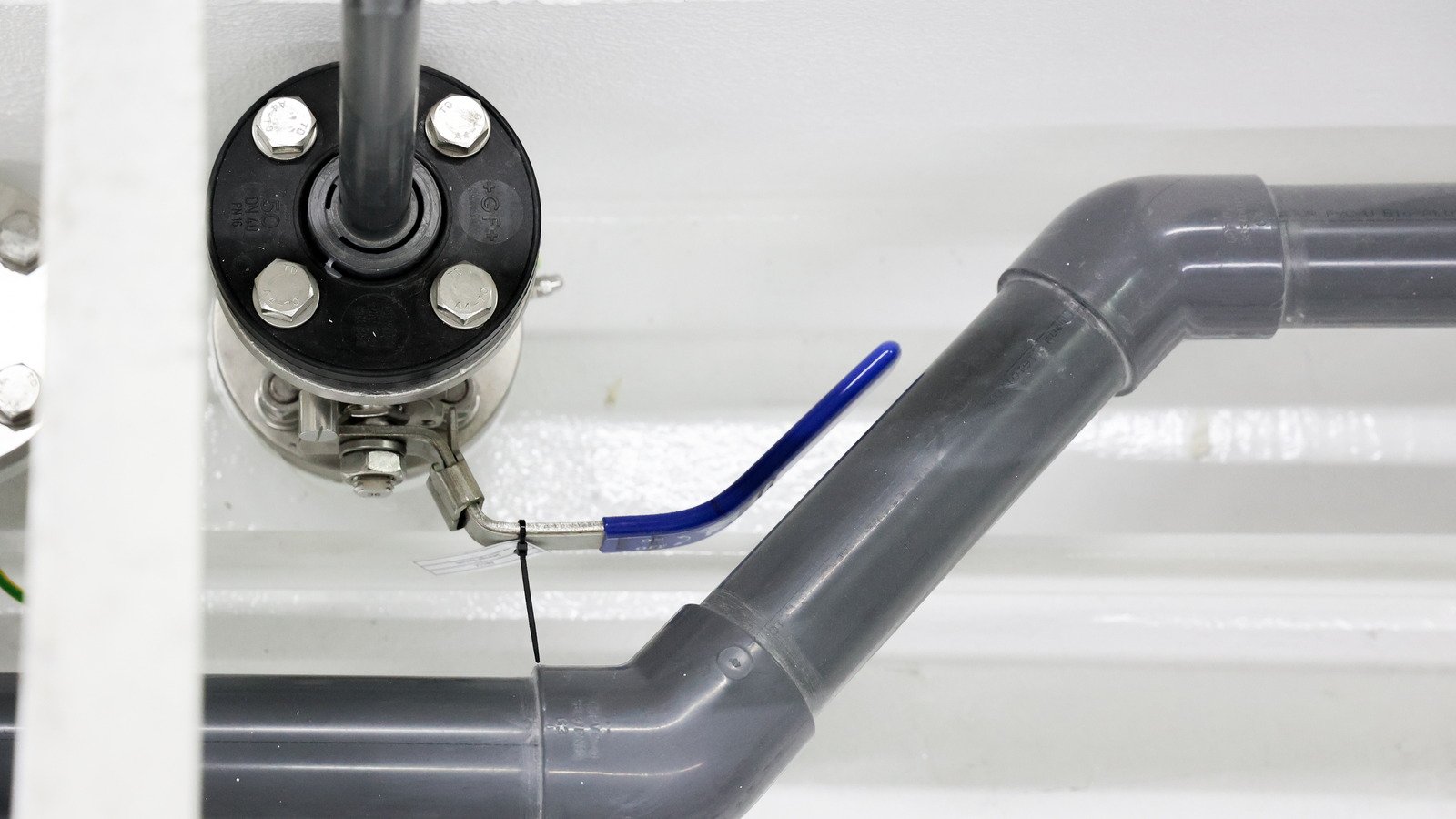
A repower without a propeller review produces one of two faults, and both show on the first trial. The wheel is heavy, in which case she is overloaded, never reaches rated revolutions and runs hot, which is the fault that costs the turbocharger and the valves. Or it is light, in which case she reaches rated revolutions short of full load, feels lively, and never makes the power she was bought. Both are propeller faults rather than engine faults.
The match is torque and revolutions at the new rating, through the new reduction ratio, against the hull's resistance as she now floats. A changed ratio brings diameter and tip clearance back into question, and pitch is corrected or a new wheel is cut.
Fuel the new engine will not forgive
A modern common-rail engine asks a cleanliness of its fuel the unit it replaces never did. The injection pressures leave no margin for the water, sludge and growth a fifteen-year-old tank holds along its bottom, and a new engine finds all of it inside the first season.
So the tanks are opened and entered rather than only circulated through a polishing rig, which moves what is suspended and leaves what has settled. Entry is the heaviest permit on this list: the tank gas freed, the atmosphere tested for oxygen, flammable vapour and toxic gas and retested through the work, a standby man and rescue arrangements at the opening, and no hot work adjacent while it is open. On an integral tank it becomes a class matter as well, and the evidence that closes it is in yacht refit class survey.
What proves it, and what it will not pay for
Before anything is opened we run her and record what she does. Without that pre-work trial a repower has no datum. The same run is repeated after commissioning, and most makers make warranty conditional on their own engineer attending and signing it off, so he is booked alongside the trial.
A changed machinery arrangement is a plan approval submission: a revised general arrangement of the space, foundation and holding-down calculations, the exhaust with its surface temperature limits, and fire boundary penetration details. The units are a long-lead order placed against the survey, for the reasons set out in the Tuzla supply chain.
A repower rarely pays for itself in fuel. Against the hours a private yacht really runs, the saving rarely amortises the units, the beds, the exhaust and the yard time inside a normal ownership period, and on a high-hour commercial or charter programme that arithmetic is worth running properly rather than assumed. It is bought so the units are not the reason a season is cancelled.
The deflection and back-pressure readings this piece turns on are taken on the job here in Tuzla, entered on the record, and handed to the owner with the vessel.
What to send before we price a repower
If an equipment schedule or a set of engine hours has already come across for another part of the scope, it serves here too and does not need repeating. What a repower decision needs on top of it is narrower: hours since the last major against the interval the maker publishes for that family, if not already sent, the last two oil analyses, any crank web deflection readings held with the condition they were taken in, the gearbox and propeller particulars, and the trading area, so the emissions tier a replacement lands under is settled before anything is ordered. What comes back is a written view on overhaul in place or replacement with the reasoning named, the propeller and gearbox review carried as its own line rather than folded into the engine, the tier confirmed by flag and class before an engine is ordered, and a pre-work sea trial listed as the first dated item. Send it to info@revivarefit.com.
SEND THE ENGINE HISTORY