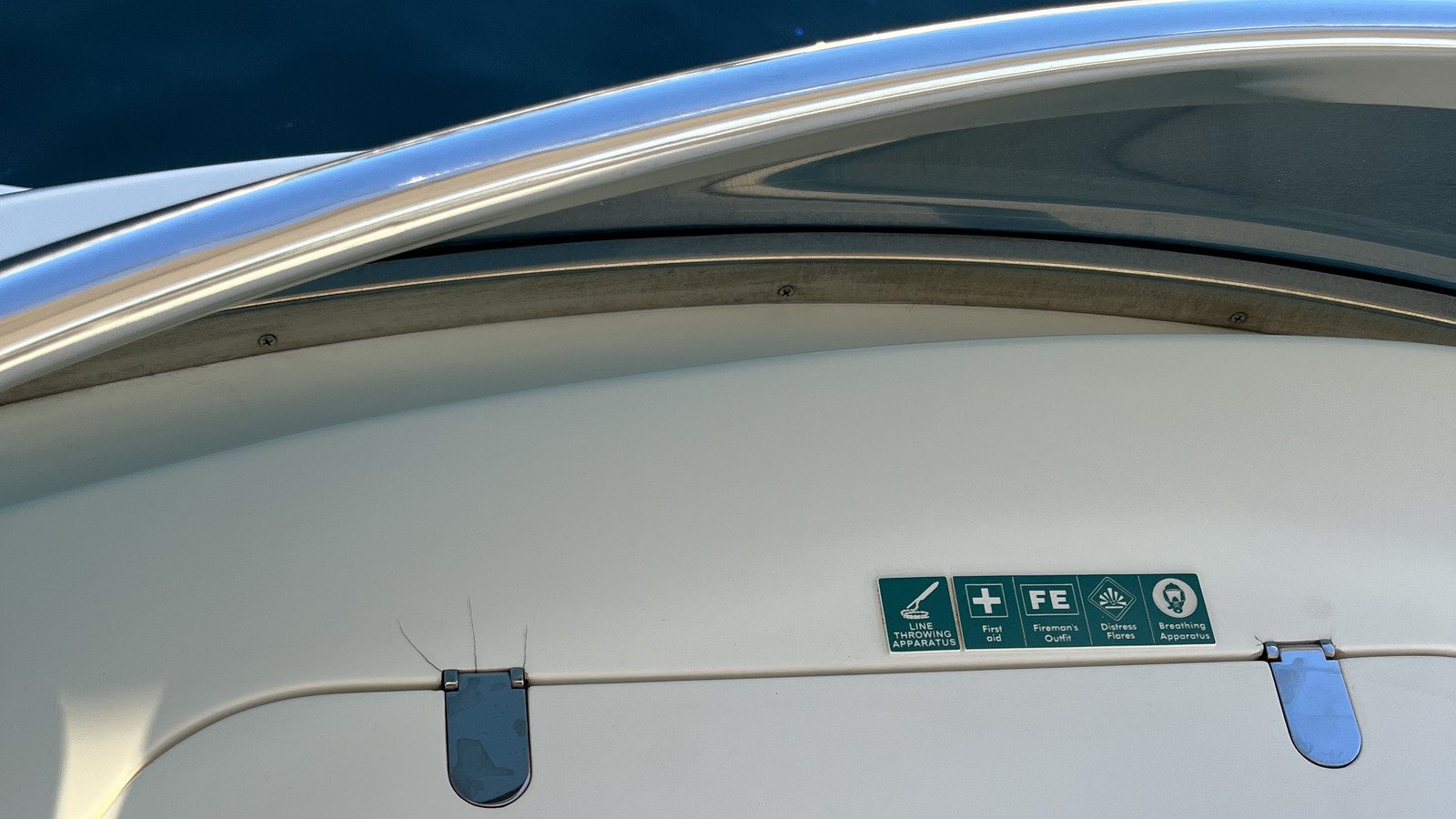
Her liferaft's next date falls in the second week of August, in the middle of her season. August was not chosen. The valise went ashore in week two of a nine-month yard period because week two was when the deck trade had a clear fortnight, and week two produces August.
The programme on the saloon bulkhead has been round twice and is marked up in three colours. Two pages that came aboard with the owner's representative have been round nothing: a typed inventory of her safety stores, item, location and quantity, with a date against half the lines in a column somebody added in biro.
Both sides filed it correctly. The stores list is stores to the yard and certificates to the owner's side, and the arithmetic that joins them is neither stores nor certificates but programme.
The date the refit writes
The bar chart carries a line for the steel found at strip-out, for a maker's lead time, for the non-working days of the Turkish year. It carries no line for a date the yard is about to set itself, which is what the biro column holds.
That a clock aboard need not start at redelivery is published here already: a warranty's own clock may run from an invoice or from commissioning, and those dates belong worked out rather than found later. The yacht safety equipment dates in that column go further. Their clock starts at an hour inside the yard period, on a day the programme itself chose.
This is the only date in the programme that the refit writes rather than reads. The yard period is not meeting it. It is setting it.
The observation has been made here already, about the people: crew certification takes no notice of the refit, and a yard period is the one predictable window in the year for revalidations. This post carries it to her equipment, with one difference. A man sitting a refresher returns with his own ticket; an item returns with somebody else's handwriting on its paper.
That these lines sort by a clock rather than by wear is conceded in as-found duty, and that the clock is somebody else's in what a refit renews. Neither that post nor this one asks when in the period the work falls.
Her flag, her class and the maker of the item decide which of her items carry an unconditional calendar date and what that date is. This journal publishes no interval.
The same valise sent ashore in week thirty-four is the same job at the same price, and produces a different next date.
The difference is not priced, because it is not a cost. It is a month, bought at the point the fortnight is allocated — by a programme built around labour availability and not around dates.
That a refit here is winter work, signed off in the season least able to produce her summer faults, is an argument about the season she is proved in. This is about the season her next date falls in, and the autumn booking chooses both.
Moving a date forward is bought, not free
Work done well before a date falls due throws away validity already paid for. The gain is the month the new date lands in; the price is the months given up for it. Few lines are worth that, and the sum needs her existing dates beside the programme.
Whether a date can be moved at all, and whether early work writes a new date or merely shortens validity already bought, is the maker's answer and her flag's, and not the same answer for every line. A yard period makes the question askable. It does not make the answer yes.
The trade that wants to be done late
The standing advice in this journal is to do it while she is open: as-found duty before isolation, photographs before the panel goes back. The reflex is right for almost everything a refit touches, and wrong here.
This population inverts it. The new period runs from the service and not from redelivery, so the useful position is as late in the period as the work can be done and the item got back aboard. A refit that gets everything else right by the early reflex gets this wrong by it, and nothing on the invoice separates the two: the same service, the same price, a different month. In date, or out of date, and the item's condition is not the question.
Deferring a trade on purpose is an uncomfortable instruction to give a foreman, and it is the only way the month is chosen rather than inherited.
Out through the gate, and back with another hand on it
Who holds a maker's authorisation in Turkey, who places the booking and who owns the date when a diary slips is settled already. The flow here runs the other way: what comes back is not a report about the item but its own remaining life.
That items leave the yard is no fresh observation: outbound movement and the appointed agent are published ground. Nor is this a disposition, since removed equipment goes to a named destination, and this one's is her own locker.
The yard keeps a document for gear going off her, the landing inventory signed at the lift; the owner's side keeps one for dates falling due, the certificate file in the pack that leaves with her. An item goes out on the first and must come back endorsed on the second. That reconciliation is one clerical entry, misfiled as a trade's.
The failure is not an owner who forgot a date. It is a gate entry closed on the item coming back and never on the paper that came with it: the certificate in a folder at a contractor, and her file still showing the old date when a surveyor reads it in the first week of the season.
What a yard answers for, and what it cannot
This yard holds no approval to service, test, recharge, repack or certify any item of safety equipment, and nothing on this payroll changes that: the work goes out, to firms approved by somebody else. What a yard at Tuzla can answer for is custody and record, not condition.
Custody and record at Reviva are a gate entry against the item taken off her, a booking out against the line that removed it, and one row per item closed when the endorsement is in the file, not when the item is back in its locker.
Our twelve months covers the removing, the stowing and the putting back. It covers nothing written on a certificate somebody else signed. Which approved stations serve this district is a question to put to a yard at Tuzla in writing, and a yard answering with a name should be asked for the approval behind it.
Those two pages are worth reading in the week of the condition report, before the bar chart exists. One decision per line: which week of the period this item goes ashore in. Made before the programme is drawn, it is a choice. Made after, it is whatever the fortnight happened to be.
Written at the yard in Tuzla. Nothing here states an interval, an expiry, a renewal date or a servicing requirement for any item. Which of her items carry a calendar date, what that date is, who may work on them, and whether a date can be moved rather than merely shortened, belong to her flag, to her class and to the maker of the item. This yard holds no approval to service, test, recharge, repack or certify any item of safety equipment, and it names no service station: that work goes out to firms approved by somebody else.
Which week each line should fall in
Take her existing safety equipment dates straight off the paperwork, put the yard window you are booked for beside them, and the question answers itself on one sheet: for each line, which week of the period the work should fall in. What comes back is that sheet done before the programme is drawn rather than after — which of those dates a yard period would write rather than read, which lines a later week would help, and which would only give up validity already paid for. Whether any of them can be moved at all is the maker's answer and her flag's, and the answer differs line by line, so it is worth having in writing while the programme is still a draft. Write to info@revivarefit.com, or telephone the yard on +90 (850) 226 28 72.
START A REFIT