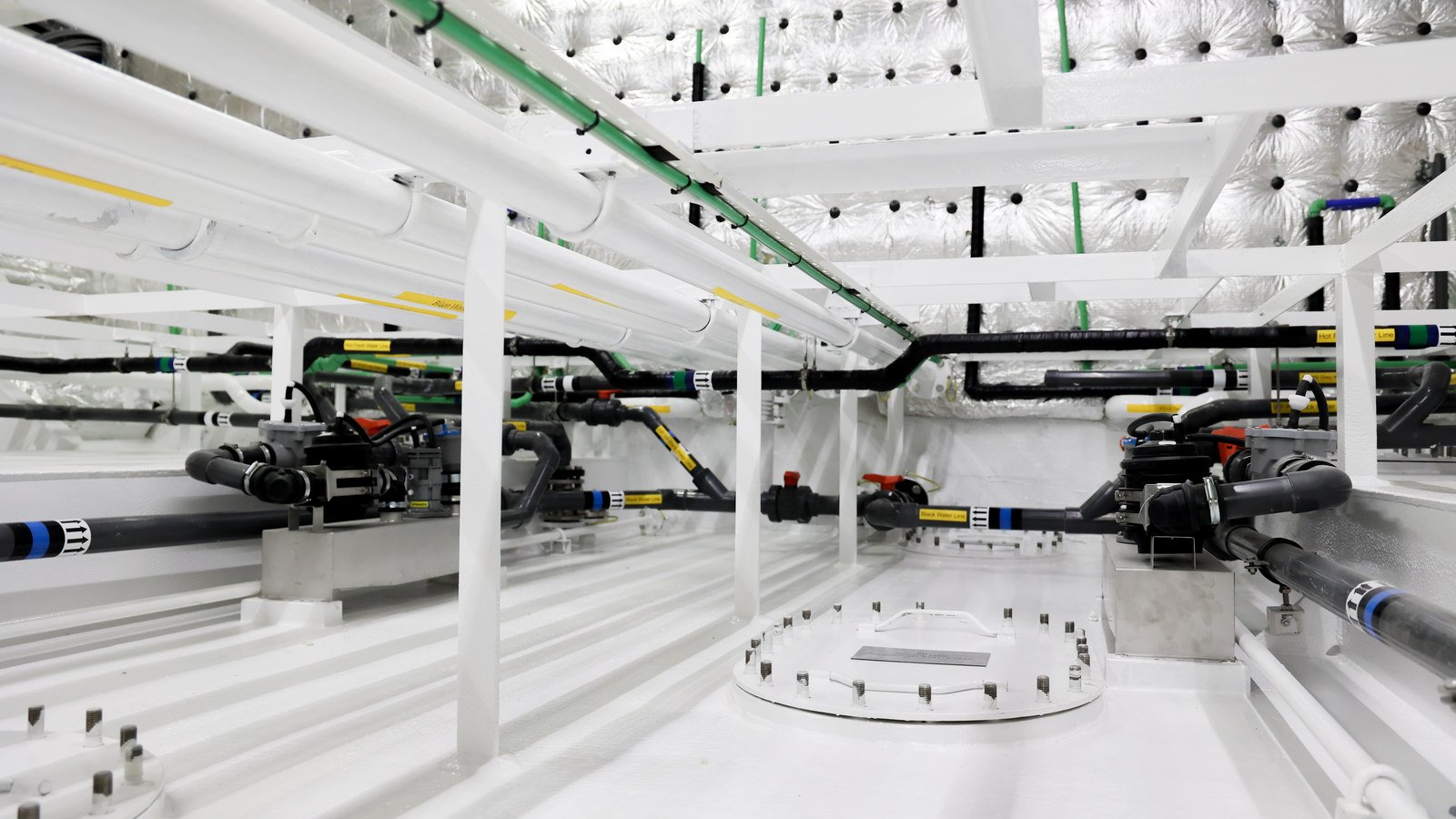
A question asked in a stripped cabin
The aft lining of a guest cabin is off and stacked in the passage. Behind it is a void nobody has looked into since she was built: a chilled water line, a junction box, two runs of tray, and a monitoring gateway on a bracket, working perfectly well. The electrician asks the obvious thing. While it is open, do we change the gateway?
He is not reporting a fault. On a full refit that question is put another forty times, in forty compartments, always because a panel came off.
The other half of the question
What a second attempt on this void would cost is priced elsewhere: a dock period is a window rather than a scope of work, and what comes off first sets the range on the line. Panels, labour, the trade queue, the week.
That figure is a denominator, and it says nothing whatever about the gateway on the bracket. The cost of getting back in is the same figure whether the unit going in is right or wrong.
The other half is whether the thing going behind this panel will still be the right thing when the panel next comes off. Everything in deciding what to upgrade in a yacht refit sits in that half, and it has its own test.
Two clocks, and which one the item is on
Sort the equipment lines by one question, and sort them before the order goes in: is this item's service life counted in the same units as the interval between her openings? The sort changes what gets bought, not where it gets written down.
For much of what a refit touches the answer is yes. Structure, coating, insulation, a pipe run, a cable route, a seating, a bearing are lifed by the vessel, and that interval is read off her own papers and not off a general rule: the last docking, the dates in her file, her next special survey. Fit the better version while the compartment is open and you have bought the interval. Nobody withdraws support for a bearing housing.
For another set the answer is no, and it is not close. A processor, a display, a chart engine, a control head, a battery chemistry, a monitoring gateway. Their clock is a maker's support window and a bus specification rather than the vessel's, and we will not put a figure on that window: it belongs to the maker's own published policy, and it is the one date nobody aboard can read in advance. That refusal is the argument, not a hole in it.
This is not a sorting by wear: a display behind a lining may never be worked at all and still be finished long before the tray it is screwed to.
A few lines return both answers. A long-lead unit sits on a maker's calendar and is reachable only on hers, and designing a route does not help, because the route was never the expensive part. Mark it unsorted, so the argument happens at the table and not in a fortnight with the panel closed.
The half that was going to be opened anyway
Suppose the gateway goes in because the panel is off. The access has gone to an item that will have the lining off again inside the interval anyway.
Our electronics post argues for taking the opening while it is there: panels off for cabinetwork are the panels a cable run wants. That settles which week the work is done, not which half of the scope gets it. The opening went to the half that reopens, not to the half that would never have asked for it. Both halves were reachable for the same three days. Only one of them needed to be. The lining comes down next time for the gateway, and the pipe run behind it is renewed then, at that opening's price.
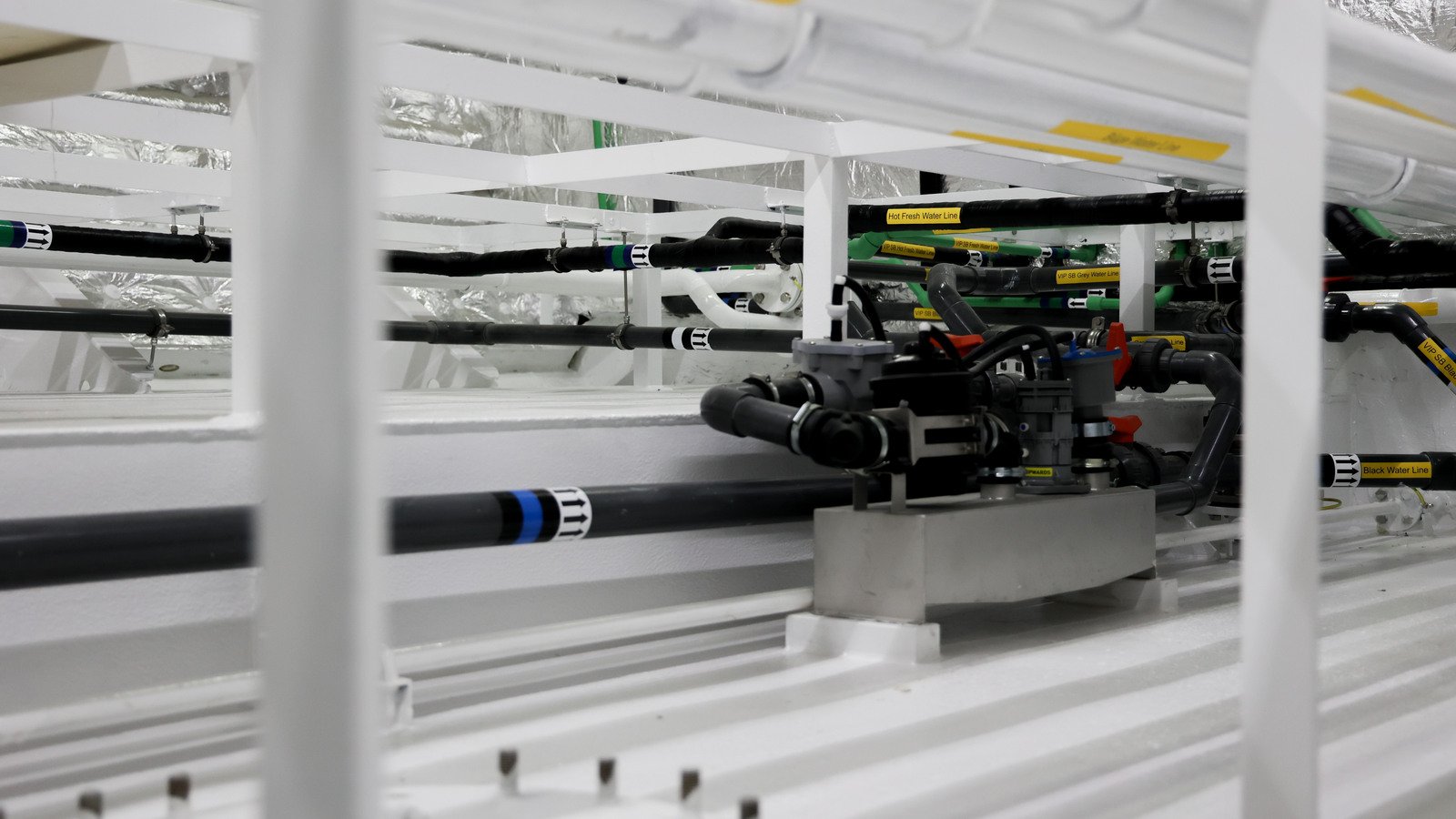
Buy the way back in, not the unit
So the rule, with its price in the same breath: put the open compartment into what will not need it opened again, and design the route to everything else so it is reached without opening it. It is not free, and it is paid in detail, not in money.
Two versions are already practice here. In joinery, an interior panel is also a hatch and is drawn as one, listed against the services behind it; that is this rule at cabinetwork scale, and it was first drawn there. In machinery spaces we route a line for the hand that comes after it, not for the shortest path.
What is general in both is the selection rule: the route is chosen by the item's clock, not by the trade building around it. As a scope line it is short.
- a gland that can be broken and remade, made up properly twice instead of once;
- a unit on a tray or a sub-frame, not bonded into its seat;
- connections landed at the reachable end of a run, not the tidy end, where a hand and a test lead reach.
A panel built to come off is more work to make than a bonded one, and will never be as stiff. Concede that on the drawing, not in the third season. An access route is quotable as a line because the joiner cutting the face and the electrician pulling the cable are on one payroll, under one foreman, across eleven in-house workshops.
None of this argues for spending more. Often the reverse: fit the plainer short-lived unit on purpose, knowing it will be replaced inside the interval, and put the difference into the long-clock half, where the interval is what is being bought. A display specified to do the job for one interval, with a designed way out behind it, beats the fullest unit on the market bonded into its seat.
Whose call this is, and what we owe
We have written that a yard cannot be the owner's technical representative on grounds of structural conflict. There is a second reason, about horizon rather than interest. A yard prices a period; an owner owns an interval. The judgement is measured in her next ten years, and the captain, the superintendent and the people who will have her that long hold the only view of that length.
We owe two things instead, against every equipment line. The class we read it as, lifed by her or lifed elsewhere, with the reason stated so it can be disagreed with. And a price for keeping it reachable — the panel detail, the tray, the gland — quoted on its own line, to be struck or kept on its merits and not buried in an installation figure. A twelve-month workmanship warranty answers for how a thing was installed, and nothing in it reaches a maker's support policy.
On that access line, what the owner is specifying is the next way in. The component is what happens to be sitting at the end of it.
Written at the yard in Tuzla, after that cabin was closed up and the equipment schedule went back on the table. Nothing here is an opinion on what her class will accept for a replaced unit or an altered access route; that is the attending surveyor's to give, and it is worth asking before the order goes in.
Name three things you would change while she is open
Write down three items you would renew simply because the compartment will be open, while the compartment list is still being drawn. Tell us which three at info@revivarefit.com, with her last docking date and when her next special survey falls. We will say which of the three run on her clock and which run on somebody else's, and what it would take to reach the second kind without opening the compartment again.
START A REFIT