The window, and what the docking plan settles
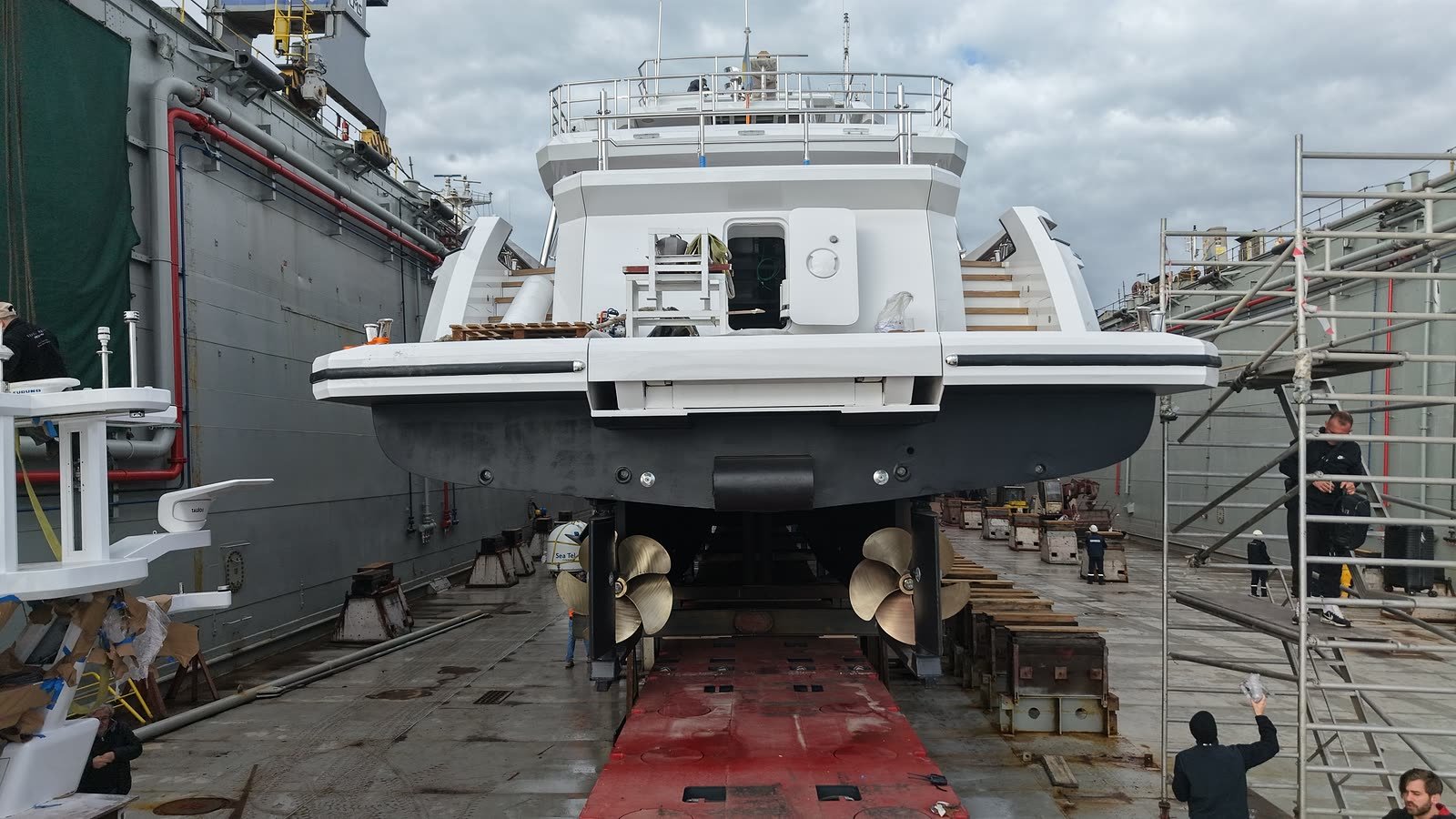
A superyacht dry docking is a window, not a scope of work. Everything below the boot top and everything passing through the shell can be reached for a fixed number of days, and then not at all. The discipline is deciding in week one what has to happen inside that window, and refusing to let anything else eat it.
The docking plan is read before the dock is flooded down. Blocks land on frames, bulkheads and tank boundaries, not on whichever part of the curve looks fair from the dock floor. A block set under an unsupported panel is a deformation, and the fairing programme pays for it months later at a bench nobody connects to the day she landed.
Weight is the other half, and it is her weight now rather than the lightship figure in her stability book. Tankage aboard, a tender in the garage and joinery added by two previous yards all come down onto those blocks, and the side shores are set against the same numbers. Get that wrong and she is corrected later for a fault the dock put in her.
A block lands on structure or it lands on a repair.
Under the shell, and what a fixed number of days has to carry
The window-gated list is shorter than most scope lists suggest. Shafts are drawn, and what the readings settle is covered in how long does a yacht refit take. What the blocks add is the room to do it: a coupling broken, a clear run aft of the stern tube and a lift standing over it. On most arrangements none of the three is available with her afloat, and which arrangement she has is read off her drawings.
Sea valves and hull openings are most cheaply reached in the same days, and each opening is reinstated to a specification rather than put back. Part of that scope can be worked afloat with the opening blanked, and which part belongs to her arrangement and her surveyor rather than to a rule.
Anodes are read for wastage, and the telling one comes off nearly untouched. An anode that has not worked raises a question about the bonding to what it was meant to protect, and a meter answers that question rather than the eye.
Plate readings are taken where the substrate can be reached, which is why the dense set arrives in the week of the blasting rather than at enquiry. What they then do to a quotation is taken apart already in what a thickness map actually tells you.
The evidence changes form once she is dry. A clearance becomes a dial gauge reading against the maker's limit and against what was recorded the last time she was out, repeatable at the next docking. That turns an argument about condition into a variation priced at discovery.
The coating clock, and what sets the float date
The last weld rarely fixes the day the dock is flooded. The last coat does. Anti-fouling carries a launch window measured from application as well as an interval in front of it, so a coat finished too early fails in the same way as one finished too late. Cure is time, and no labour buys it back.
A wasted frame end found in week two puts hot work in front of a coating programme already timed to the float date. Which of them moves is decided in week two, not in the week she is due to float.
Closing her up, and what goes back last
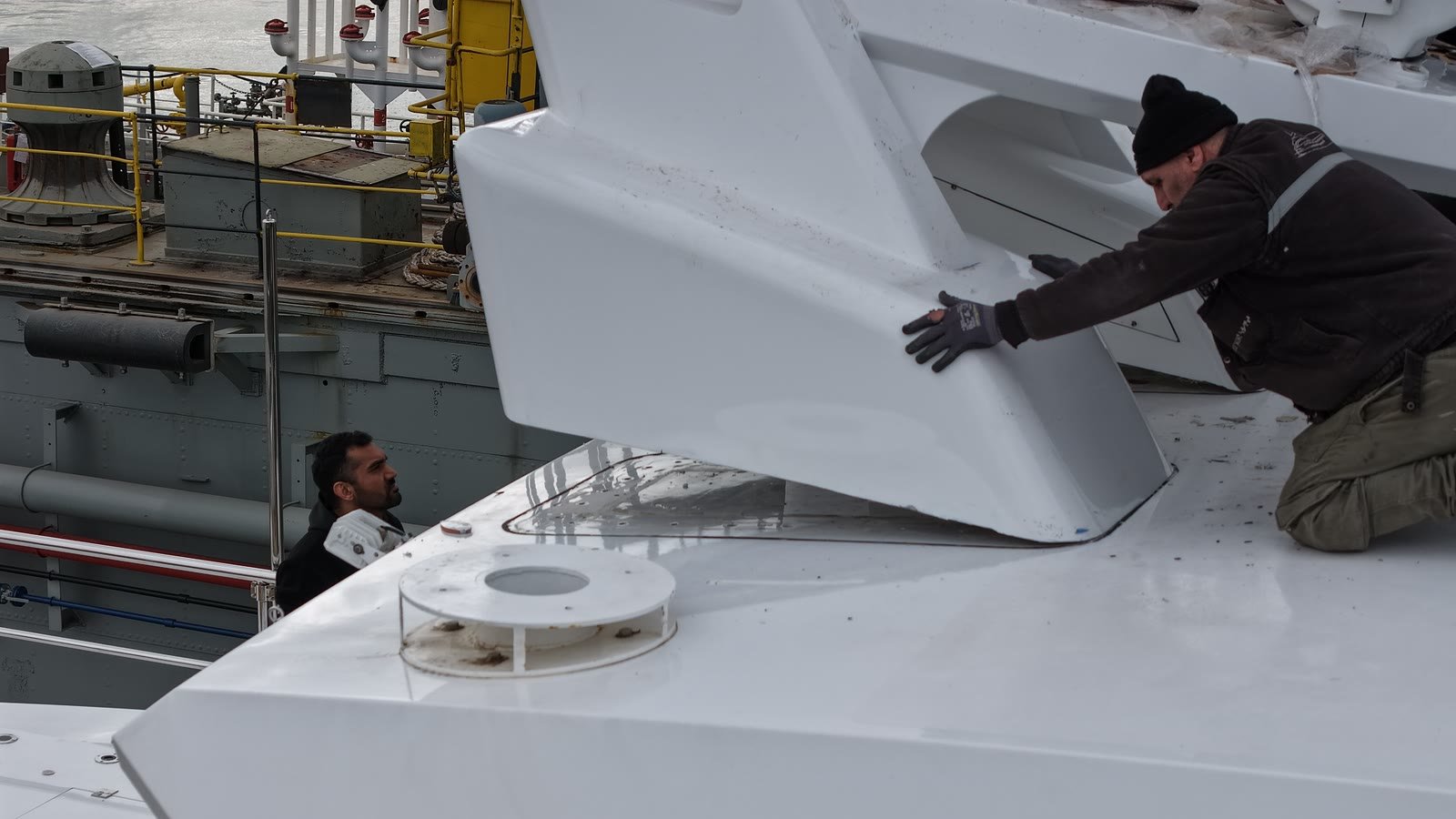
Every panel, hatch and fitting that came off to give access is a path back in, and each goes back to a specification. Bedding compound, fastener type and torque and the state of the landing underneath are recorded, because when a leak is found on the passage home the first question is which joints were opened.
What goes back last is whatever sits over something still to be pressure-tested or proved on the float. The reinstatement order is written from the test schedule rather than the lift plan. A panel refitted a week early is a panel that comes off again.
What this yard does with the window
What follows is a claim about arrangement, and about how many separate mobilisations a fixed number of dock days has to carry. Eleven trades sit on one payroll here, across workshops at Tuzla, a dry dock at Pendik, hull and steel at Yalova and service at Bodrum. A wasted frame end found on blocks is cut, welded, faired and coated by hands answering to one programme, and a component that goes out to a specialist goes out on the yard's purchase order.
- One named project manager from assessment to redelivery and one foreman per hull, because the day she floats is a single date and cannot be held by four people at once.
- A photographed written report every Friday she stands on blocks, because a hull is in this condition once and nobody photographs it afterwards.
- Readings, certificates and test results indexed by compartment and date in the redelivery pack, so the next docking begins from a figure rather than from zero.
- Purchasing, freight and customs held by the yard, so a bearing away at a specialist is chased by the people who own the float date rather than reported on by them.
What a superyacht dry docking cannot absorb, and where this yard answers worst
A dock is among the most congested resources in a yard, and usually the least elastic. A found frame end extends a docking that a following vessel is already booked behind, and both owners cannot be right about the date.
The harder answer is geographic. The dry dock is at Pendik and the workshops are at Tuzla, so the trades are on one payroll but not on one site, and a bracket that would be carried to a bench is a van journey while she stands on blocks. The specialists who machine and balance a shaft sit in the district and not inside this fence, on a turnaround no arrangement of ours shortens.
A vessel re-docked mid-programme carries a move as well as a lift, and the access is mobilised twice, which is the arithmetic set out in when a yacht is worth refitting.
The commonest failure is quieter. A dock period scoped from a wish list rather than from readings ends with her afloat, the visible work done and one compartment still unopened. That is not a saving. It is a deferral taken by omission, and the next docking is where it is paid.
Written at the yard in Tuzla. The readings quoted here are the ones we take on blocks and hand over with the vessel, and what class will accept in any given case belongs to the attending surveyor and to her own class society.
What to send before a dock period is programmed
The document that is useful first is her docking plan, not a scope list. Send it with the last dock report and its outstanding items, the shaft and bearing readings taken when she last came out, her sea valve and hull opening schedule, and the date she has to be back in commission. What comes back is the days on blocks we would programme for the work named, which of it we would treat as window-gated and which can be worked afloat, and what would have to hold for her to float on that date. Send it to info@revivarefit.com.
SEND DOCKING PLAN