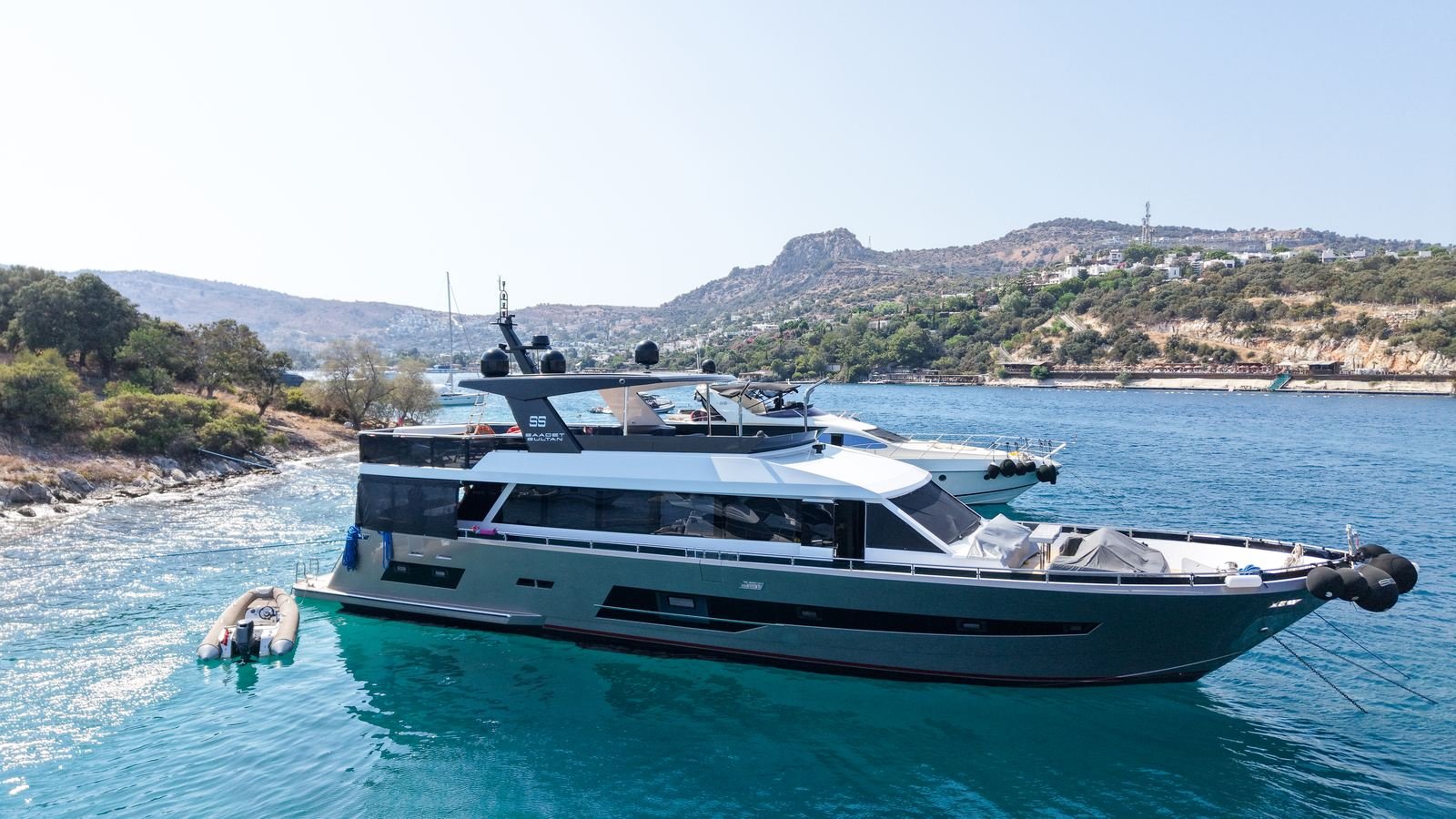
A yacht refit sea trial is the last of a sequence of proofs, and by the time she lets go most of what it confirms should already be written down. Snags are closed before she runs, for the reason set out in what the joinery closes in. It is the stage where everything recorded through the yard period is supported by a reading or is not.
What a row in the register has to carry
The register is opened with the work rather than at the end of it, which is the punch-list argument made in what yacht refitting actually involves. One row per item: the system by its tag, the location by compartment and frame, the defect as observed rather than diagnosed, the trade that owns it, the dates raised and closed, and who verified closure.
Three categories are enough. The first prevents a trial being run, the second must be closed before redelivery, and the third is agreed for attention under warranty after departure with its route already named. The argument with an owner's representative is over which category a row belongs in, and it is cheaper in the middle of a yard period than in the last week.
Closure is evidence rather than assertion: a reading, a photograph of the completed detail, a signed test sheet, a countersignature from whoever raised it. The captain, chief engineer and mate write into the register directly, and an item marked done by the trade that did it has not been closed.
What is proved before she moves
Nothing moves until the vessel can look after herself. Tank soundings are checked against the calibration tables, valve line-ups walked against the as-fitted diagrams, and bilge and fire main held at pressure. Remote closures, quick-closing valves and ventilation flaps are stroked from their release stations rather than at the valve, and the bilge and oily-water systems proved onto the yard's reception arrangements rather than overboard. Alarms and shutdowns are forced point by point and observed at the panel and at any remote repeat, and fire detection is restored head by head from the isolation register kept through the work. Commissioning is the input to this rather than part of it: a trial is not the place to discover whether a system works.
The dock trial
The dock trial is run moored and doubled up, the mooring plan reviewed for the loads it will take. Propellers thrusting against a fixed vessel do not represent sea load, so running is held to short periods at stated settings and read for behaviour rather than performance: leakage under pressure and temperature, cooling and exhaust temperatures settling where they should, and shaft seal behaviour with the shaft turning. The electrical plant is read separately: generator load acceptance and paralleling, then a deliberate blackout with automatic start and restoration on the emergency set, then the hydraulic power pack held at pressure with more than one consumer running.
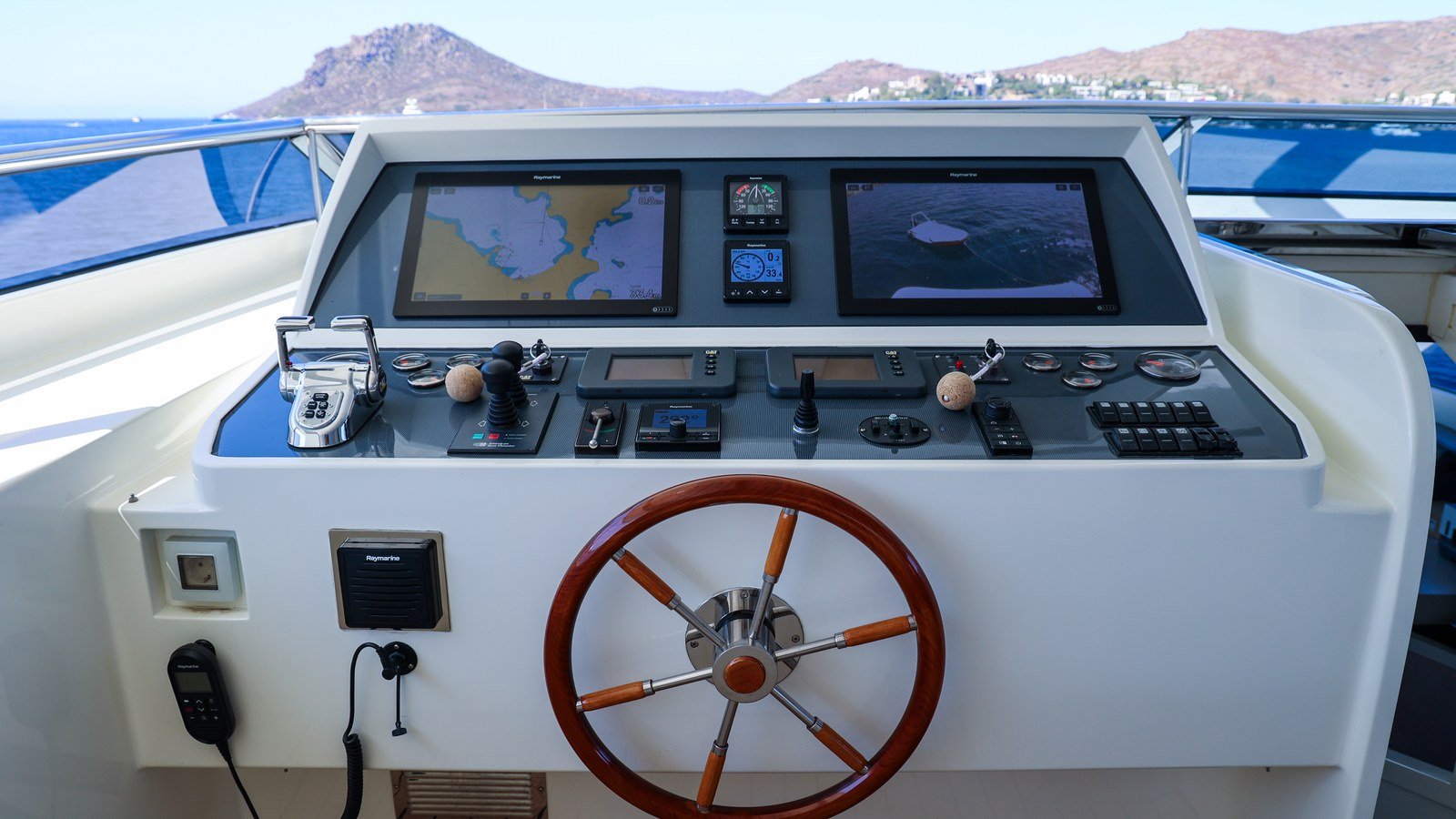
The yacht refit sea trial, and the repeat day after it
Deep water lies a short run from the yard, inside the Sea of Marmara. The trial itself is two days with the owner aboard, and a re-run of two failed items is another working day rather than a second mobilisation. So the programme is written with repeat days in it. Items can be scheduled to be repeated, which means they can be allowed to fail.
Every line carries an acceptance criterion and a space for the reading. A progressive speed run is taken through the range, revolutions, load, temperatures and fuel logged at each step. Manoeuvring covers turning circles both hands, a crash stop from ahead to astern with head reach and time recorded, and the steering gear timed hard over and through its changeover.
What the steering is timed against depends on the vessel. One carrying the SOLAS standard is held to thirty-five degrees on one side to thirty on the other in not more than twenty-eight seconds, at maximum ahead service speed and deepest seagoing draught, the figure SOLAS Chapter II-1 Regulation 29 sets. A smaller yacht is timed against her class society's figure instead. Either way a surveyor times it with a watch, and the condition she was actually floating at is recorded beside the result.
Anchoring is proved by letting go and recovering, the mean hoisting speed measured against the class requirement of not less than nine metres a minute over two shots of cable, with at least three shots out. Noise and vibration are read at the reference positions. A trial that produces no findings is usually a trial that was not instrumented. What it finds goes to the register like anything else.
Class and flag afloat
Some items can only be witnessed afloat, and those fix the date. A sea trial after a refit is where steering and its changeover, anchoring and windlass, the emergency generator and its automatic start, the emergency fire pump, remote closures and machinery under load are witnessed by the attending class surveyor, the flag or its recognised organisation attending what is statutory to it.
Attendance is booked against a firm date, witnessed items placed late enough to be ready and early enough to be repeated. An item that fails and cannot be re-witnessed leaves as a condition of class or a short-term endorsement, with a date on it, closed in the first port of the season by whoever the owner appoints.
What the trials add to the pack
The redelivery pack she leaves with is set out in yacht refit services in Turkey, and a yacht refit sea trial adds to it. Into it go the signed programme with every reading against its criterion, the snag list at closure with its categories and verifiers, and the carried-forward rows against whoever now owns them. With them go the certificates issued or endorsed at the trial, and the isolation register closed out, every detection loop back in service and by whom. The speed, noise and vibration readings become the datum for her next yard period.
The date she leaves on
The passage out, and the temporary importation regime she arrived under, are set out in planning a yacht refit in Turkey, and the specifics of the second belong with the vessel's agent rather than the yard. The date itself runs backwards from the first charter date: the passage, the owner's margin, bunkers, provisions, crew joining, and cover reverting from a yard risk to a cruising policy. Clearance out with the harbour master, customs and the passport police carries its own date in the programme, because a vessel ready for sea and waiting on a stamp is still alongside.
The trials programme and the snag register this piece turns on are the ones written here in Tuzla, signed by the surveyor who attended, and handed over with the vessel.
What to send if a date is being set against a season
Send the first port and the date she has to be there, with the scope as it stands and the class and flag position. What comes back is a trials week and a departure date worked backwards from it, showing which items need a surveyor afloat and where the repeat days sit. Send it to info@revivarefit.com.
SEND THE DATE