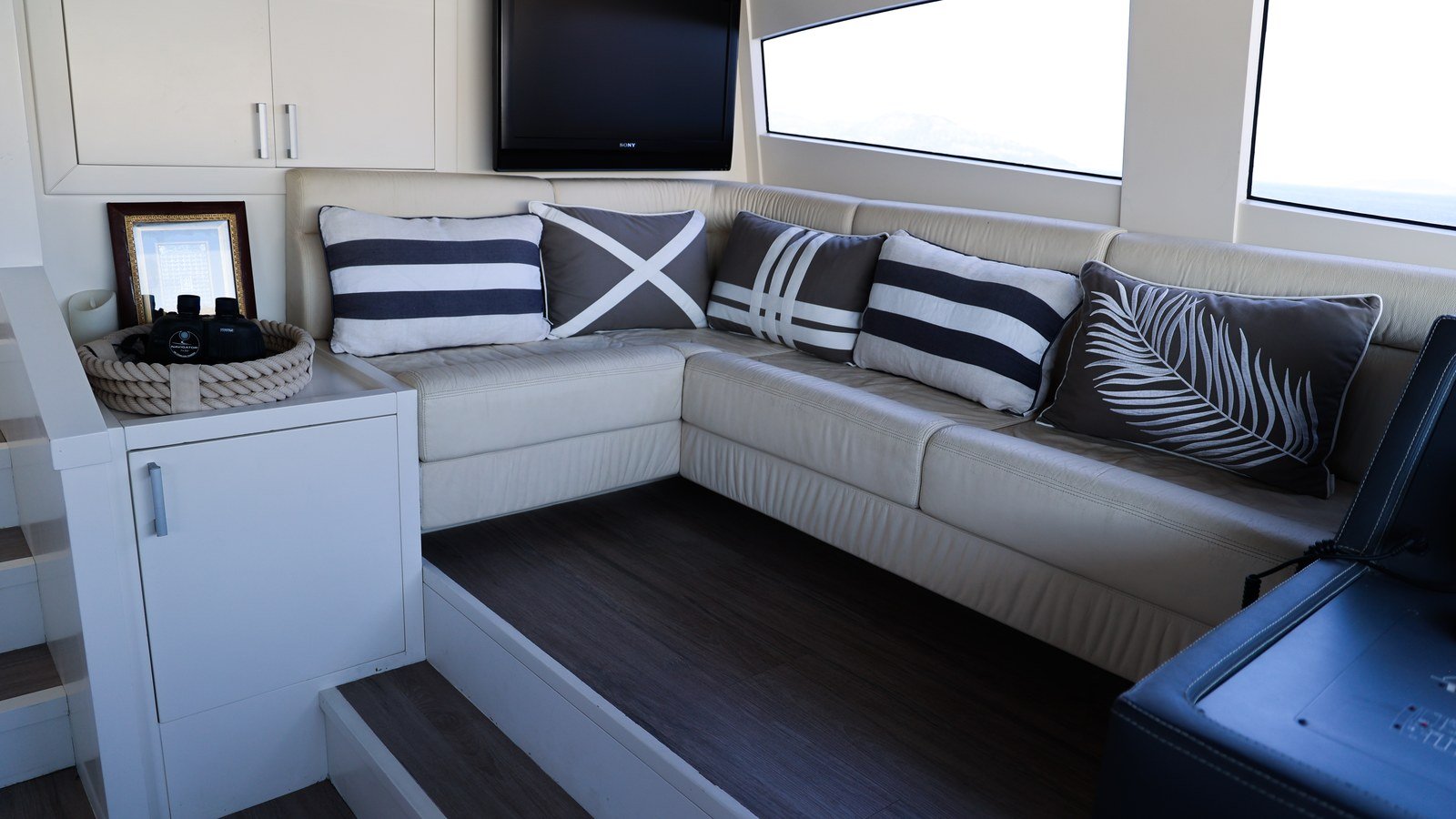
A yacht interior refit is discussed as a decorating decision and priced as one. It is four engineering decisions taken before a colour is chosen. The panels lining a saloon are a weight, a fire boundary, a moisture-sensitive assembly and the lid on every service run behind them. Most of the cost sits in that list rather than in the finish, and so does most of what goes wrong after handover.
What comes out whole
Work begins with a survey of the existing interior, panel by panel. Each piece is judged on three counts: whether it can be removed without destroying it, whether it is worth returning, and what sits behind it. A saloon that gives back nine of its twenty panels is a different job from one that gives back none.
Removals are slow on purpose. Concealed fixings are opened rather than broken, and the detail is drawn before the last screw comes out, since reproducing a fixing that already worked is cheaper than designing a replacement. Pieces that come out whole are marked by cabin, by position and by orientation, and racked flat and dry. Stone, glass and hardware are catalogued separately.
Weight, and what it does to trim
The interior is among the heaviest single items an outfit carries, and one rebuilt in solid-backed plywood where the original was foam or aluminium honeycomb can add hundreds of kilos on a small yacht and tonnes on a large one.
Lightship, and the centres of gravity with it, sit underneath the approved stability information. Under the Red Ensign Group Yacht Code the thresholds are published rather than negotiated: two per cent or more change in lightship weight, one per cent or more in the longitudinal centre of gravity from the aft perpendicular, or a rise of a quarter of one per cent or more in the calculated vertical centre of gravity from the keel. Past any of them the work counts as a major modification. A lightweight check falls due every five years in any case, unless it can be clearly demonstrated that no major change has occurred.
Whether an interior crosses those lines is arithmetic, and arithmetic wants weights: pieces weighed as they come off, panels as they are made, each recorded against the space it belongs to. A yacht interior refit is cheaper carrying that figure through the build than finding at the end that the trim has moved.
The certificate that comes with the board
The core decides most of it. A marine joinery panel is generally a light core faced both sides and edged, chosen for weight, for how it takes a fixing, and for what it can be certified as.
On a yacht in commercial use of twenty-four metres load line length and over, the Red Ensign Group Yacht Code Part A, or the equivalent code her flag applies, brings linings, ceilings and surface finishes inside structural fire protection: a limit on surface flammability, and limits on smoke and toxic effluent. Which chapter a superyacht interior refit answers to depends on whether she sits below or above five hundred gross tons. Whether the current code applies, or the standard she was built to, turns on whether the work is a repair or something that substantially increases her service life. What her code is read against is set out in the class survey piece.
The evidence is approval under the two thousand and ten Fire Test Procedures Code, for the material as supplied and in the build-up it is supplied in, arriving on an EU-flagged yacht as a Marine Equipment Directive wheelmark certificate, held per item and on file before the material is cut. Where a lining crosses an A or B class division, penetrations for cable, pipe, trunk and duct go back exactly as approved to the division's rating.
Loose furnishings answer to their own parts of the same code: upholstery composites to Part 8, curtains and drapes to Part 7, organic foams in upholstered furniture and mattresses of the combustion-modified type, and floor coverings, as surface materials, to Parts 2 and 5. In spaces fitted with sprinklers or an equivalent fixed extinguishing system those two approvals are not required, and material without a certificate may instead be put through an approved fire-protection treatment. Which applies is settled with the flag and the attending surveyor before the fabric is chosen, not after.
The flitch, and what it is holding
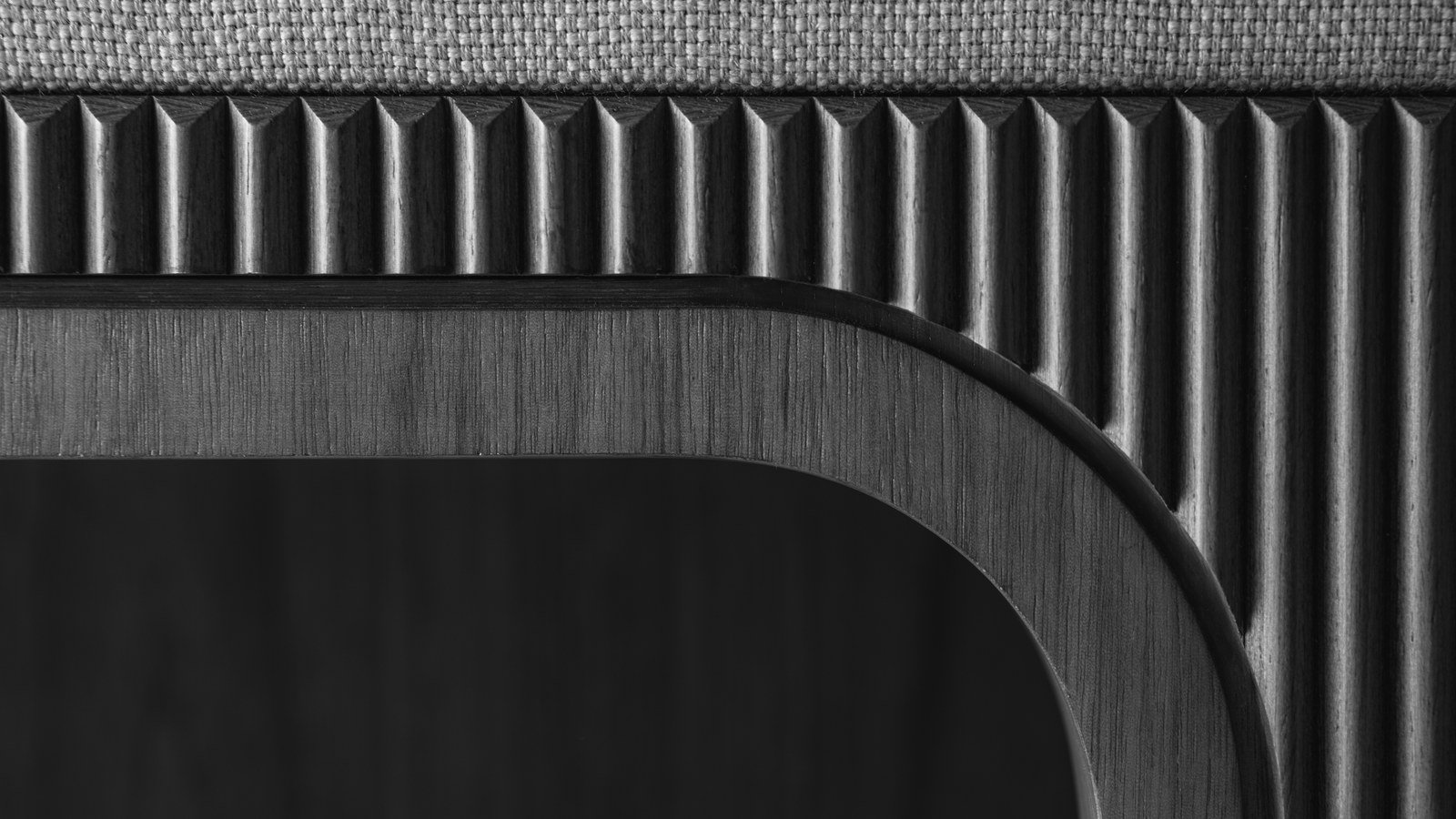
Veneer is selected at the flitch rather than from a sample chip, the leaves kept in the sequence they were sliced in so that book or slip matching runs true across a bulkhead. The interior trades here come out of Turkey's furniture industry, and the caveat comes with them: a panel that lies flat in a dry shed can bind after a season in the Aegean. Moisture content is the answer to it.
Timber, veneer and core are conditioned to the equilibrium of the interior they are going into, commonly eight to twelve per cent, with the target set for the species, the core and the climate the vessel will actually work in, and checked with a meter rather than assumed from the delivery note. A panel pressed wet loses that water in service, and the loss shows up as an opened joint, a lifted edge or a hairline in a lacquer that was perfect the day it left.
The set is assembled dry in the shed before it goes aboard, on a jig cut to the vessel's measured geometry. The week it costs is argued there.
Access kept behind the panel
Every panel is also a hatch or a barrier, and which one it is is settled on the drawing, not at the bench. Valves, filters, junction boxes, pump seats, sensors and manifolds are listed against the panels that cover them, and those panels are built to come off: concealed but reversible fixings, a face lifted without cutting a sealant joint, and clearance behind for a hand and a tool. What they have to allow is a strainer changed in the third season without a joiner.
What goes back under cover
Finished joinery is protected with breathable board and cloth rather than sheet plastic, which traps moisture against new lacquer. The last operation is a walk of the compartment at night, under the lighting the owner will use.
The weight register and the material file this piece turns on are kept at the bench here in Tuzla, and go ashore with the panel drawings when she leaves.
What to send before an interior scope is priced
Send the general arrangement, the interior drawings and a note of the vessel's registration and flag, so the evidence regime is settled before any material is chosen. What comes back is the scope split panel by panel into what returns, what is remade and what is new, with the weight register and the material file opened against it. The joinery shop can be seen in Tuzla on any working day, and a vessel in fit-out when one is alongside. Ask to see a panel off the jig and the certificate that goes with it. Send it to info@revivarefit.com.
SEND THE DRAWINGS