Four gates, not one
Come in from the Marmara and the shoreline east of Istanbul reads as one yard: cranes in a line for kilometres, hulls high on the hard. It looks like a single address.
A yacht refit in Turkey is usually pictured the same way, as one gate, one crane, one berth, every trade working inside that fence. The picture survives until the first move order. Reviva works across four separated facilities: Tuzla the head yard, Pendik the dry dock, Yalova hull and steel, Bodrum the service point on the Aegean.
Which of them a yacht sits at, and when she moves, is decided by her measurements and her scope, before anyone signs. Owners hear the word Tuzla and picture a fence. What they buy is a sequence.
What Tuzla, Pendik, Yalova and Bodrum each do
Tuzla is the head yard, laid out on ground taken in 2012 for yachts up to 130 metres, which is what fixes bay length, door width and hook height. Joinery, metalwork, upholstery, coatings, electrical, systems, naval architecture and interior design sit within a few minutes' walk of the berth. That walk is what an in-house yard buys: a veneer sample reaches the bulkhead, is seen in the light it will live in, and is back on the bench before lunch.
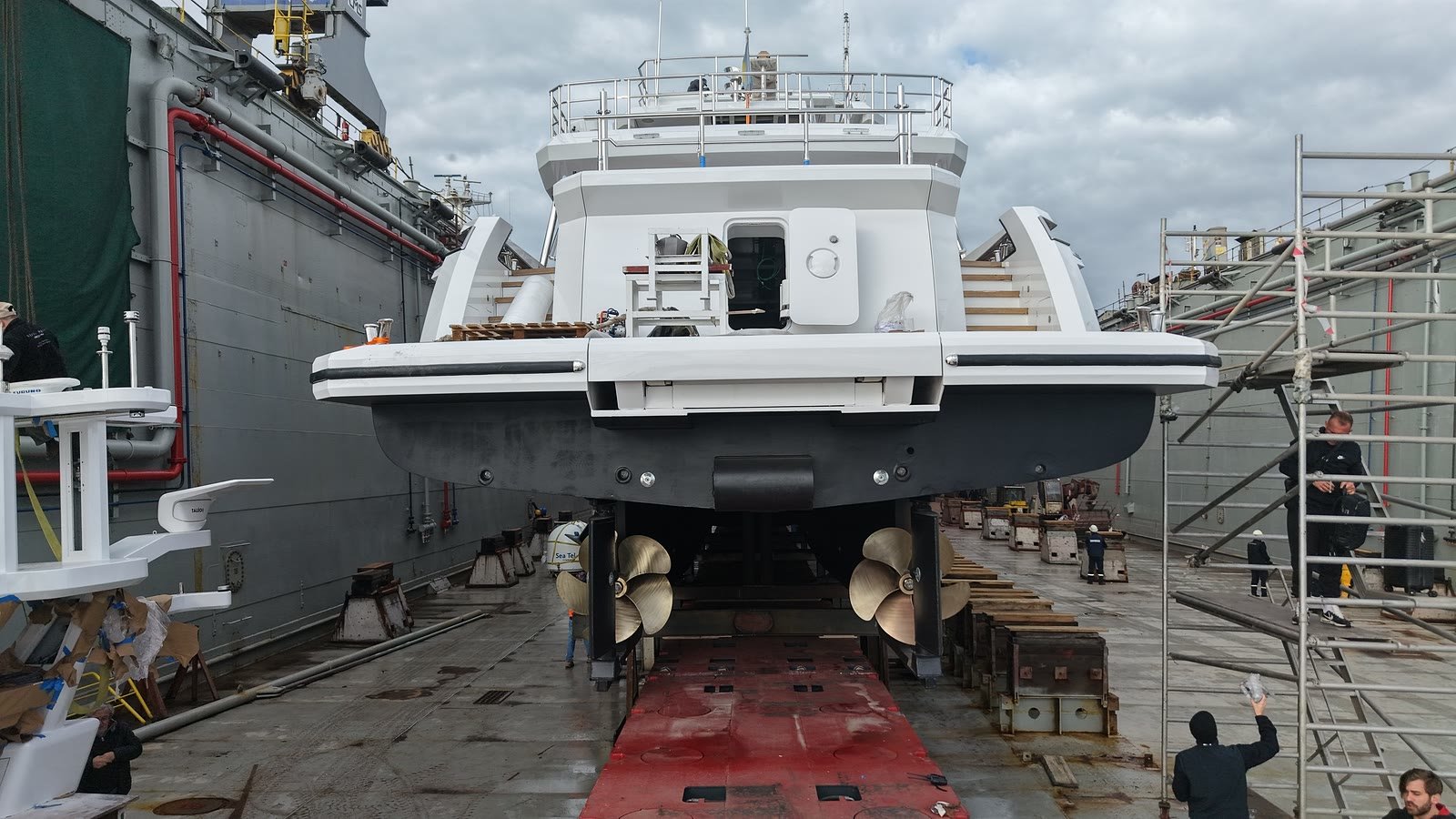
Pendik is the dry dock, for work only possible with the water taken away and the hull held still: a tailshaft drawn, a rudder lifted, shell valves out. Docked days are the least elastic there are, which is why the dock wants a closed scope rather than one still being discovered. Pendik settles not what happens on blocks, but whether she has to be on them at all.
Yalova is hull and steel: plating renewal, structural sections, welding at volume, on ground where none of it happens beside a finished yacht.
Bodrum is the service point, on the coast where the season is spent. It takes what closes out alongside between charter weeks: a systems fault traced, coatings touched in, a snag from redelivery finally shut. What it cannot do is lift her, tent her or open structure, and a job that needs one of those is a passage north rather than a longer visit.
Draught, beam and air draught decide the gate
Draught decides whether the dry dock is a question at all. The Sea of Marmara has almost no astronomical tide: the level moves with wind and barometric pressure rather than a twice-daily range. The level on the day is a forecast, not a table.
For a hoist, maximum beam and lift capacity against her displacement in refit condition come first, and they are refusals or they are not. After them comes beam at the sling stations and the hull form under them, because a sling wants a fair band of shell with no stabiliser fin, shaft bracket or transducer in it. A panel dished under a sling comes back as a hollow the filler has to chase, long after the hoist is forgotten.
A hull that leaves no clean sling band goes onto a dock instead. So does one whose tailshaft cannot be drawn in the length she would have ashore.
Air draught applies at the hall door as much as at sea. A hall has a clear door height and a crane hook height, and those decide whether a mast stays stepped, and whether a radar arch or a deck crane stays on her at all. Unstepping a rig is a work package with its own crane booking, rigging survey and re-stepping at the far end.
Draught, beam and air draught are asked for at survey, not at mobilisation.
Steel belongs away from the finished yacht
Heavy fabrication has its own address, and the reason is not floor space. Ferrous dust settles into a faired surface and rusts inside it months later. Hot work beside a finished interior is a permit, a fire watch, and a spark under a sole panel found at handover as a scorched veneer edge nobody can date.
So a plate that will become an insert is cut, rolled, edge-prepared and welded to a qualified procedure at Yalova, then delivered to the berth as a section. She sees hot work only at the closing seams. What matters is separation from a faired hull and a lacquered interior, not the distance from Tuzla: at the head yard the same rule puts fabrication in its own bay, where a set of steel masts for the 1931 barque Sea Cloud, a DNV class programme, is being made for shipping to Malta to be stepped.
Structure travels more cheaply than a yacht does, and further. Steel dust and finished lacquer do not share a shed.
What a move between facilities costs
Tuzla, Pendik and Yalova are hours apart in sheltered Marmara water. Bodrum is not a shift of berth but a passage of several hundred miles, out through the Dardanelles and down the Aegean, and a yacht goes there because she is already on that coast. The fuel is not the cost.
The cost is a hold placed on every trade at once. Nothing is fitted while she is under tow or under her own power. The berth she leaves has to be made safe and the berth she arrives at reopened: scaffolding struck and re-erected, tenting rebuilt, hot work permits reissued, class and the underwriter told where she is. A hull halfway through fairing comes back to the temperature and dew point it left.
So the sequence is written to move her as few times as the scope allows, and in one direction where it can be. Steel first if steel is in scope, dock next if she has to come out, then the covered hall months, where the door stays shut and dew point is logged every hour. Those moves are drawn during Imagine and Survey, before the price is fixed.
A yacht at more than one address is hard for an owner to see, which is what the Friday report is for: hours booked, packages closed, variations raised, written and photographed, from whichever gate she is behind.
A move that appears in week nine was a planning failure in week one.
Where a Turkish refit sits on the map
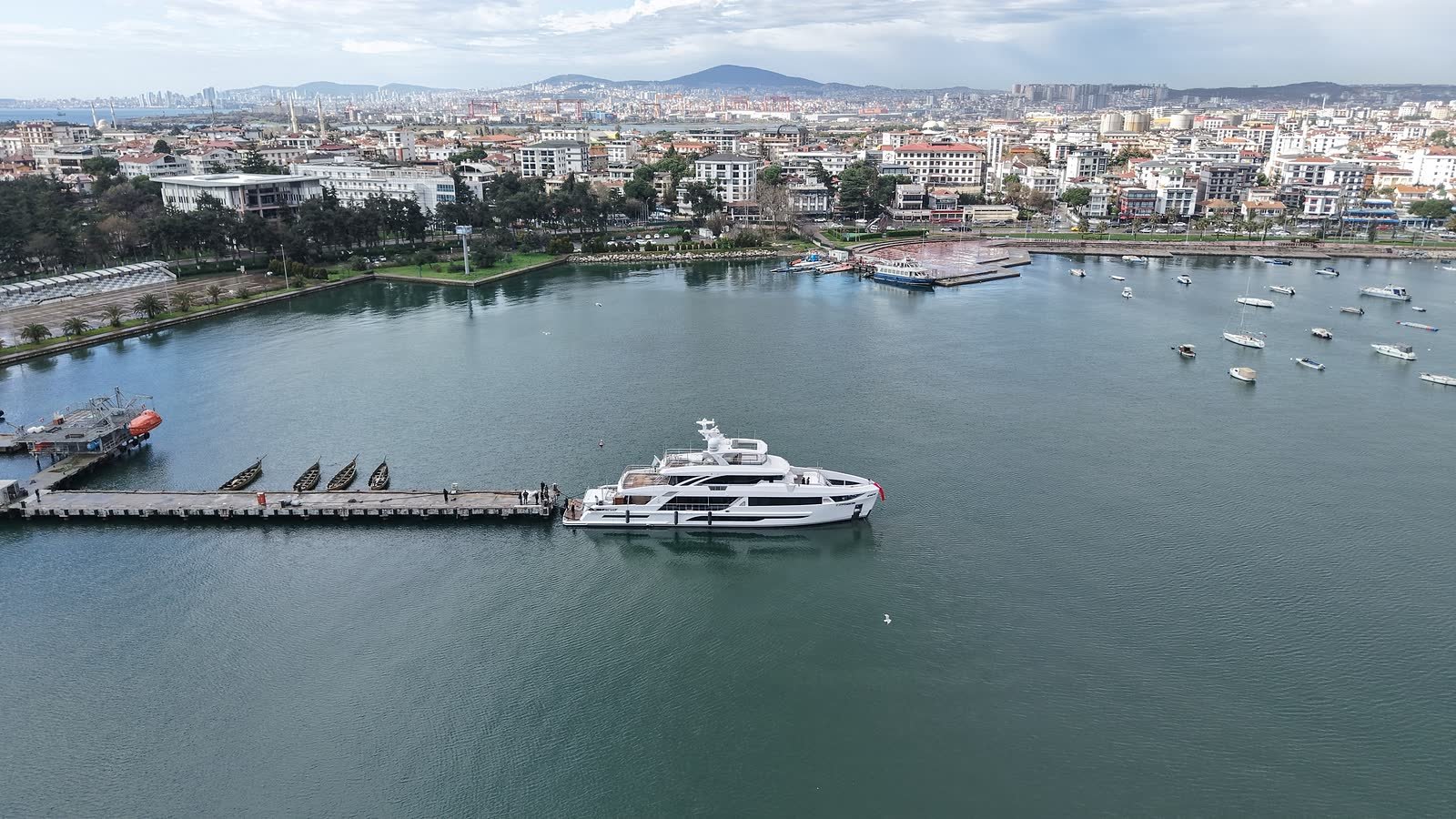
Tuzla sits on the Sea of Marmara inside Istanbul, at the junction of the Mediterranean and Black Sea passages. A hull coming up from the western Mediterranean reaches a superyacht refit in Istanbul through the Dardanelles, and never needs the Bosphorus. Shipbuilding was moved onto this waterfront from Ayvansaray by state decree in 1983, and the district grew up around the yards moved into it.
That spacing is what lets a sequence across four facilities be planned in weeks rather than months: a dock slot, a steel package and a hall booking sit close enough to be moved against one another when one slips. A tailshaft needing skimming goes to a lathe a few kilometres away, and the time it takes is machining time rather than shipping time.
Where to refit a yacht in Turkey is not a question about a fence. It is a question about a district, four facilities inside it, and which of them her own numbers put her behind in which month. A programme that cannot be drawn on a map has not been planned.
Four gates, and her own numbers decide which one she is behind in week one.
Written at the yard in Tuzla. The allocation described here is how we sequence our own facilities; lift capacities, dock dimensions and hall clearances differ between yards, and the figures that matter for any given yacht are the ones taken off her own drawings at survey.
Which gate she belongs at
Send her length, beam, draught and air draught with the scope as you understand it today, and we will tell you what a survey would need to look at and which of the four facilities is likely to be in the sequence. The survey stage ends in a written condition report, an approved scope and a price that does not move.
START A REFIT