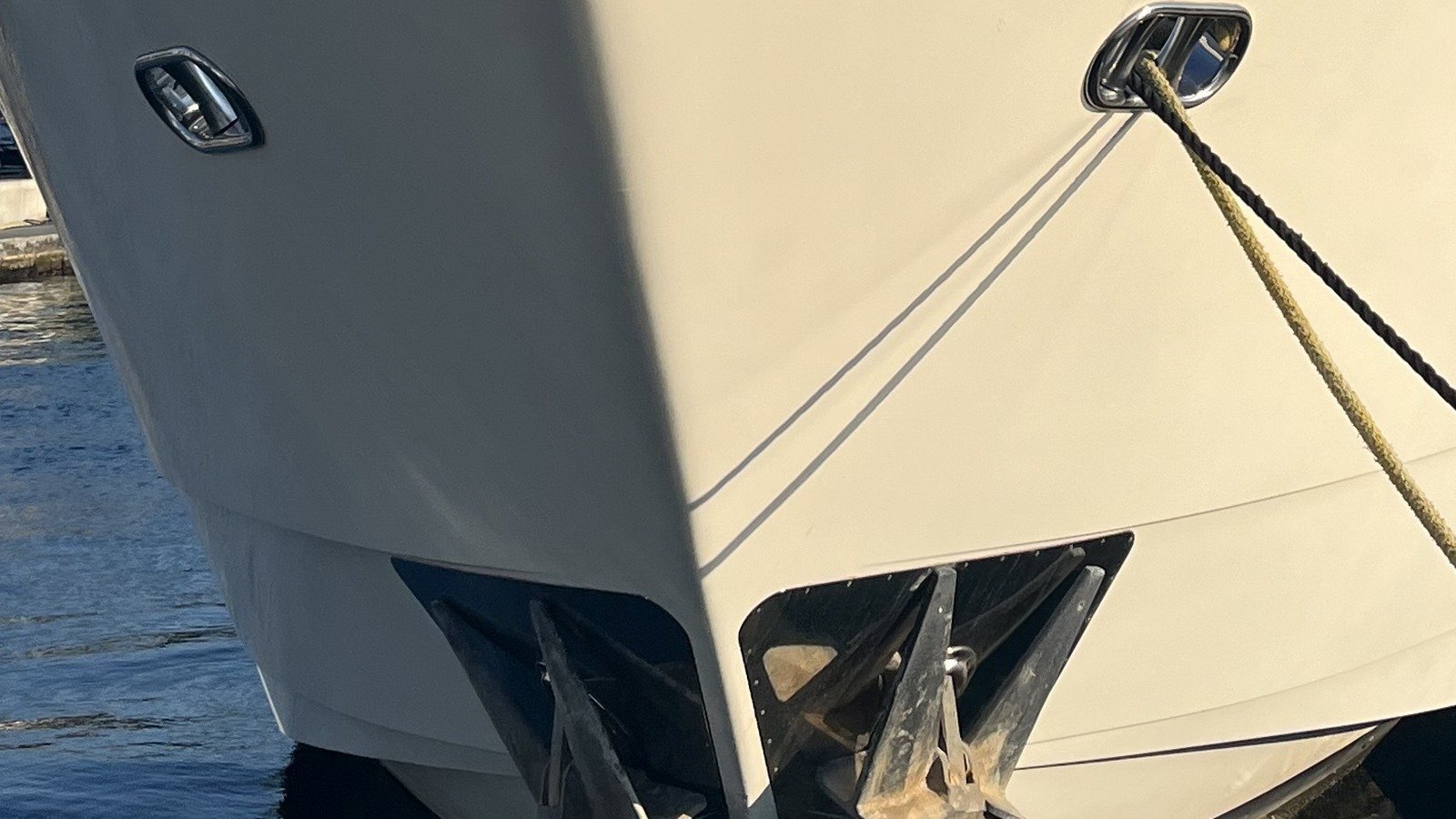
A little after three, staging has gone up along her port side since first thing. Where it reaches the forward third, the two forward warps no longer lead where they led on the morning she came alongside. Her own crew lead them outside the new tubes and make them fast again, ten minutes, done properly.
The bearing point those warps now take is not the one the first three weeks took. Her mooring has been redrawn by a scaffolding plan.
At a berth with effectively no tide, mooring a yacht during a refit in Turkey is a geometry that changes only when somebody changes it, and a refit is the one stretch in her life that keeps changing it. The geometry is moved by decisions other trades take, for reasons unconnected with how she lies.
A long yard period is one arrangement in five states, arrival to redelivery, each correct the afternoon it was made. The week numbers below are one programme's.
Week one: made fast to the geometry the berth was booked for
She is made fast to a berth chosen months earlier against her measurements and her scope, at whatever height out of the water and in whatever wind the morning gives. The arrangement is sound, and it is dated from the moment it is made.
The level here moves with wind and barometric pressure rather than a twice-daily range, which four yards, one district has already set out. Left alone, warps stay where they were put. That is the ordinary condition of a yacht lying anywhere on this coast, and it is what makes the rest of this a refit subject rather than a mooring one.
What she lies to is hers to set. The warp, the chafe gear and the fender arrangement are her master's and her manager's, with the line maker's published data behind them, and no figure appears below as a standard.
Week four: staging up one side, two warps led round it
Staging is erected to a plan drawn for the shell and its trades, not for her leads. Where it stands proud of the side, a lead that was fair in week one crosses a tube. The correction takes ten minutes and holds. It is also a different arrangement, with a different angle, a different bearing point, and chafe gear wanted where it was not wanted before.
A load held at one point with nothing relieving it is the whole subject of the half-turn that runs out, and that mechanism is not reopened here. Nor is the off-season version of this berth: a winter layup in Tuzla already states the Marmara half of it, that a mooring here is tended against wind and pressure, and already applies standing in one position to a shaft bearing. Both are taken as read. The second state is simply not the first, and a scaffolding decision made it.
Our part in that is narrow. It is knowing in advance which afternoon the geometry she was booked against stops being the one she lies to. The trades who erect the staging are employed here rather than brought in: Reviva keeps eleven in-house workshops on one payroll, so the week the tubes reach her forward third sits on a plan held long beforehand.
Week eleven: containment sealed down, fenders off the band
A coating scope reaches the topsides, and containment is sealed down around the band being worked. Fenders that have hung in the same two places since she arrived cannot hang there while it is up, so they go forward and aft that afternoon. She bears at a different height now, against a different part of her.
Containment does something else the mooring feels. Sheeted and sealed, it is a surface the wind can push, and wind is what moves the level in this basin. The same warps hold a vessel with more area to catch than the one that came alongside had.
Containment is also a boundary somebody has to own before a trade walks into it, as the fence, and what crosses it sets out. Whoever shifts a fender carries where it now bears, on the same plan as the containment.
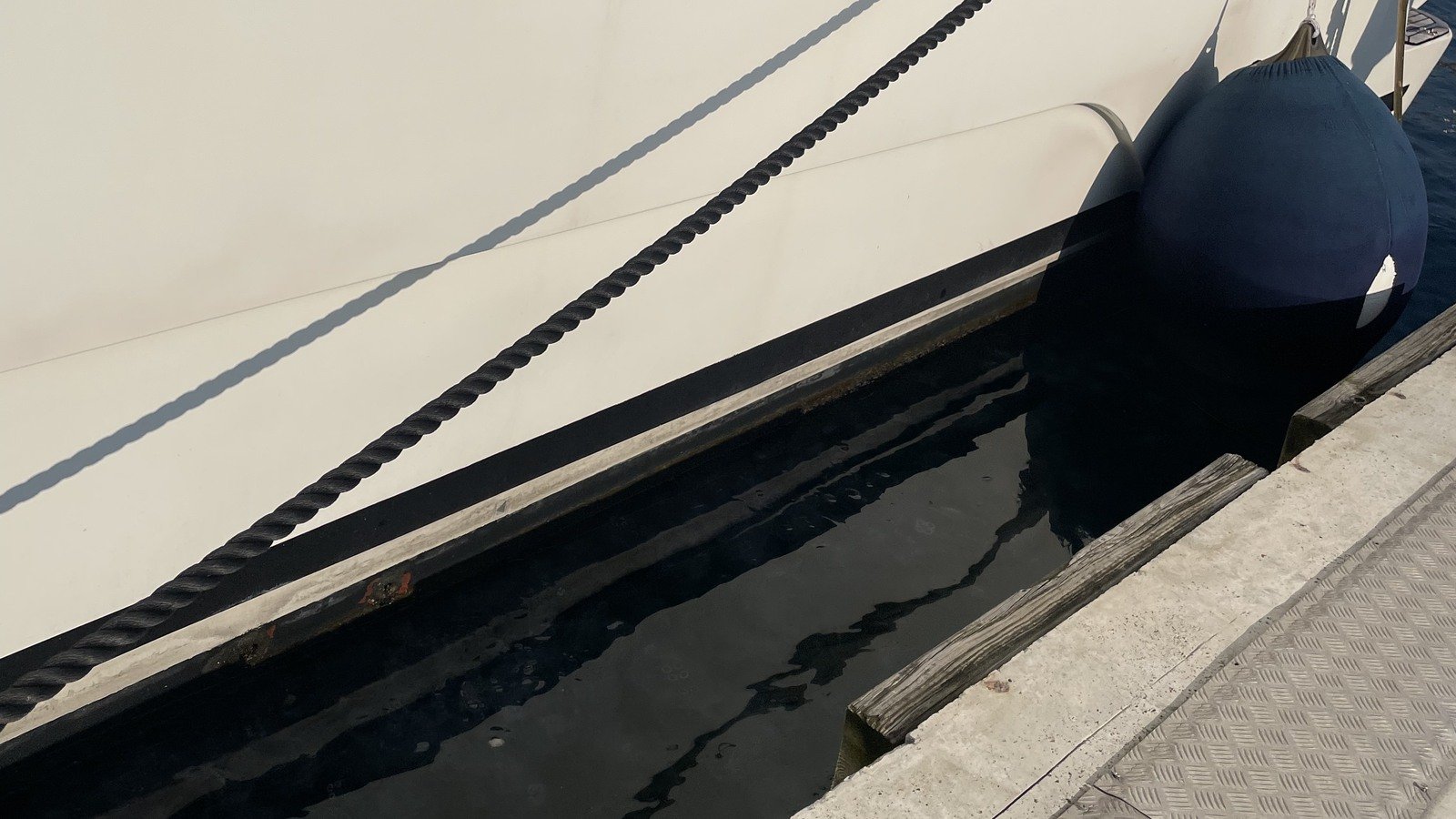
Week nineteen: a supply and a hose aboard through an opening that stays open
A shore lead comes aboard, and a wash-down hose with it, through a side hatch drawn to be shut. For some weeks it is not shut, and an opening that has to stay open is an opening nothing else may cross. A warp that would have led past it leads elsewhere. A fender below it is moved clear of the fall of water. The supply itself is taken apart separately in fifty hertz on the quay.
She is lighter by now as well, with the tender out, tanks down and gear ashore, and she floats higher, changing the angle of every warp still made fast.
Week twenty-six: a different quay, a different geometry
A move between facilities is the state that cannot be made small. What a move takes with it is already set out: staging struck and re-erected, containment rebuilt, class and the underwriter told where she is. The mooring arrangement is not on that list, because it does not travel. It is not an item anyone left off. It is the one thing that has to be made again from nothing at the far end.
There she is made fast to a quay she was never booked against: a different orientation to the prevailing wind, a different quay edge, different leads, worked out that morning by two people holding the staging plan for the next phase.
Redelivery: the arrangement she leaves on
She goes back to her owner lying to state five, the state nobody has had reason to change since it was made. Set side by side, the five share a shape.
- Four of the five followed a decision taken for an entirely different reason: staging in week four, containment in week eleven, the opening in week nineteen, the quay in week twenty-six. The first followed nothing, being the geometry she was booked against before she arrived.
- Each was correct on the afternoon it was made, and each after the first replaced one that had been correct in exactly the same way.
What is left undrawn is only the mooring state itself. The staging plan exists, the containment dates exist, the move date exists, and each of them is held by somebody weeks before it reaches her. None of them carries the arrangement it is going to replace.
Which is why the two plans can be laid against each other in week one. Her mooring arrangement as it stands and the staging plan for the scope will not agree about her forward third, and the week they stop agreeing is legible on a desk in week one rather than on the quay on the afternoon it happens.
Written at the yard in Tuzla. How a given yacht is made fast, what warp and chafe gear she lies to and how her fenders are arranged remain her master's and her manager's to decide, on the line maker's published data rather than on anything of ours. The week numbers above are one vessel's chronology and are not a schedule offered to anyone.
Where the two plans disagree
Call +90 (850) 226 28 72 or write to info@revivarefit.com. Send her mooring arrangement as it stands today together with the staging plan for the scope as you understand it now, and we will name the weeks of the programme that would redraw her, so the arrangement is worked out on a desk rather than settled on the quay.
START A REFIT