Three quotations for the same yacht
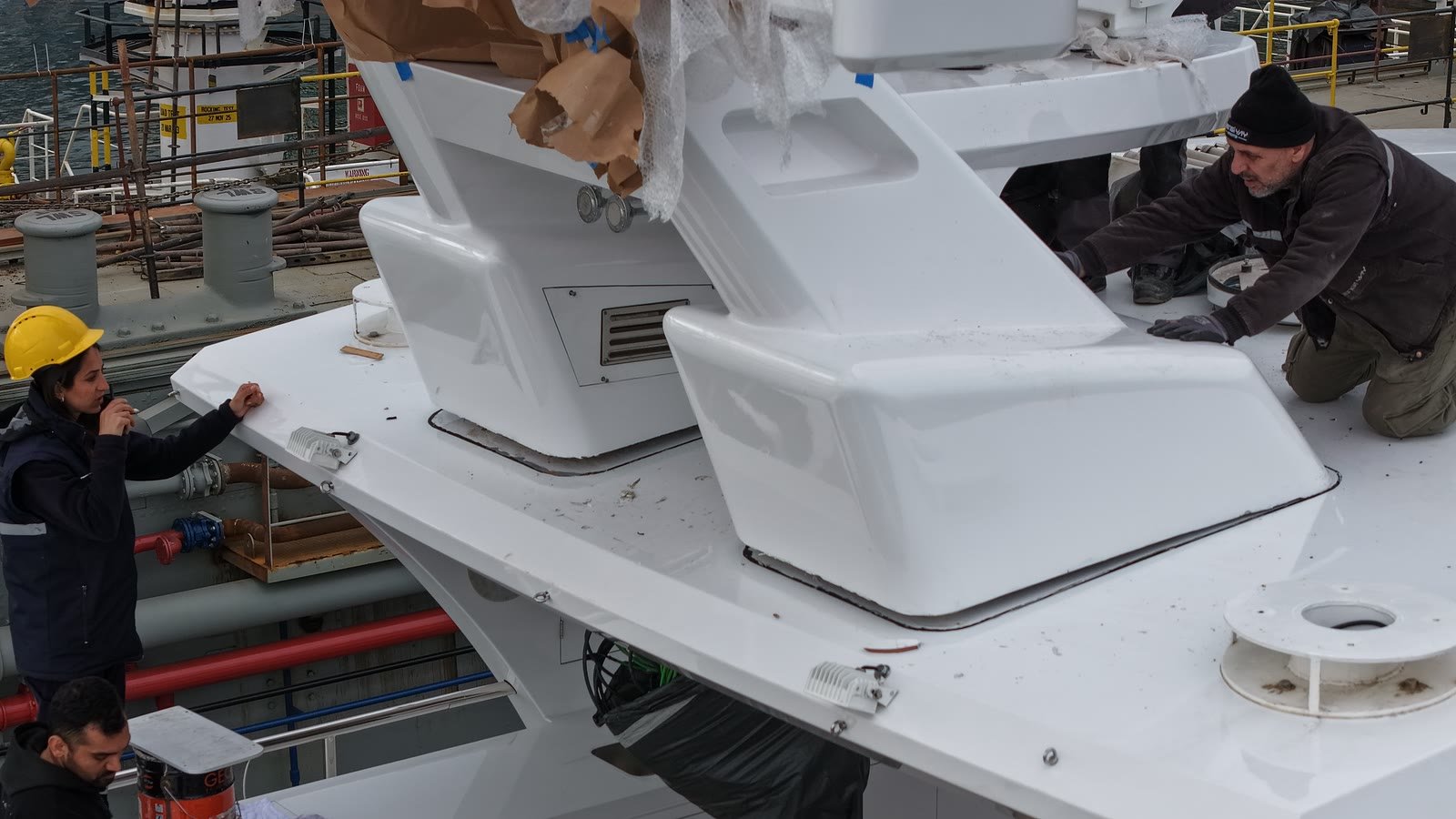
A motor yacht in the forties comes ashore with her engine room skylight lifted off. From the quay she looked finished. Under the hall lights there is a doubler weeping rust at its edge, panelling lifted where a frame should be, and a garage that will not take the tender bought last year.
Three people can stand at the same bilge keel and describe three different jobs. The first sees the wasted patch under that doubler and wants an insert plate let in. The second sees the yacht she was on her delivery day and wants her put back that way, down to the switch plates. The third asks what she is for over the next ten years.
The three quotations will look alike, and the totals will sit close enough that the choice looks like money. It is not. All three are looking at the same steel, and only one of them is holding a drawing.
Repair, restoration, refit: three different questions
Repair answers what broke. It is maintenance, bounded by the failure: a weeping stern tube seal, a generator that will not hold load. Little of it needs drawing, because the drawing already exists and the yacht is out of agreement with it.
Restoration answers what she was. It is archaeology, and the reference is documentary: a deck layout as built, a first veneer found behind a bulkhead. Where the evidence runs out, the work either stops or begins to guess.
Yacht refitting answers what she should be now. Nothing in her history settles that and no defect list generates it. Somebody has to decide that the garage should take a four-metre tender, that the lower deck loses a cabin to gain a beach club, that she should lie ten days at anchor without running a generator through the night. That is a design brief, not a failure report.
The difference is not vocabulary. Repair and restoration are answered by evidence. A refit is answered by authorship.
A refit is a design question
A refit begins where the defect list stops, because the yacht is not out of agreement with her drawings. She is out of agreement with how she is used. A boat drawn for two-week owner trips is run eleven months a year. None of that is a defect. All of it is a brief.
Authorship carries consequences a defect list never does. Move a bulkhead on a motor yacht refit and the escape route length, the fire boundary and the air changes move with it. Add a garage and you have added an opening in the shell, a downflooding point, a structural cut-out that wants compensation, and several tonnes hung at a lever arm nobody calculated.
So weight is accounted item by item on a yacht rebuild, and a change large enough is closed out with an inclining experiment and a reissued stability booklet, not with an invoice. The same arithmetic runs through the rig on a sailing yacht refit, where a changed mast section is a righting-moment question before it is a fabrication one.
The switchboard behaves the same way. Superyacht refurbishment adds load, and the way to test it is an electrical load balance redrawn for harbour, seagoing and anchor conditions, then read against generator capacity with one set down. The second generator running all night at anchor is not bad workmanship. It is good workmanship installed against arithmetic nobody redid.
Naval architecture is not a line item on a refit. It is the reason the other line items are correct.
Survey before the number
Authorship changes the order of the work. Nothing is priced before someone has been aboard, which is all a refit condition survey is: tanks sounded and entered, panelling lifted where the drawings say a frame should be, insulation resistance read circuit by circuit.
Imagine and Survey ends with three things, in that order: a written condition report, an approved scope, and a price that does not move. That is what makes the number hold. The difference between a plate that gauges within allowance and one that does not is the difference between a paint programme and a steel programme.
Design follows, and it is the stage that gets compressed when the season is close and the yacht is already on blocks. It is where the yacht refit design brief becomes general arrangements, weight estimates and cable routes. A line moved on a drawing costs a draughtsman an afternoon; the same line moved after the joinery is templated costs a shop. How the rest runs, scope into work packages and packages into rebuild and delivery, has its own piece in this journal.
A price that moves was never a price. It was an opening position.
Why the drawing office sits minutes from the berth
The naval architect who moved the bulkhead and the welder who has to cut it stand at the same frame on the same morning. That is the whole argument for proximity.
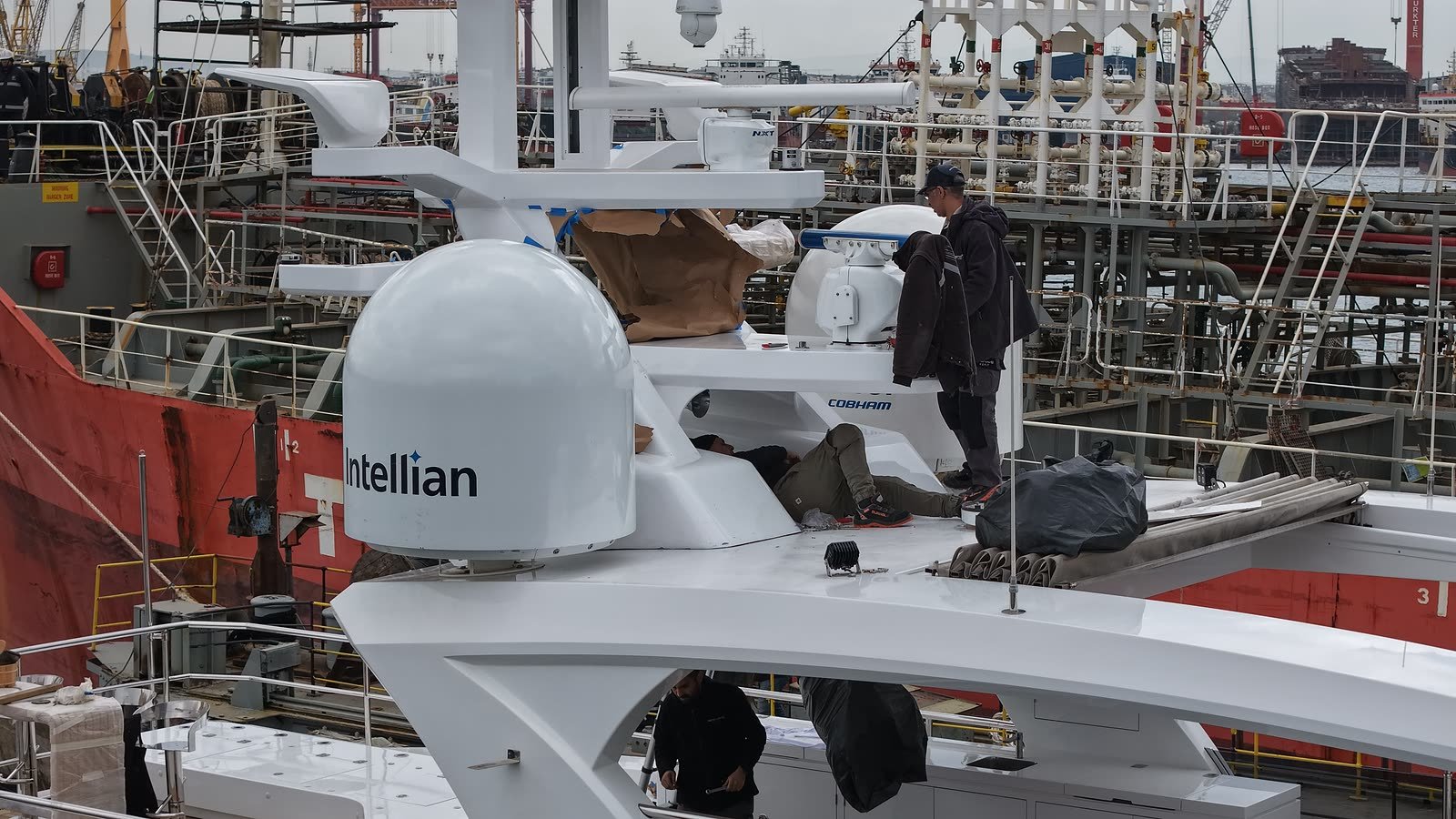
Reviva Refit was founded in 2024, on one stretch of the Tuzla waterfront. Everything in one place is why the joiner, the welder and the draughtsman are employees, not three telephone numbers. The refit trades are in-house, joinery through to interior design, and all of them are a few minutes walk from the berth.
Around 35,000 square metres of the yard is under cover, which is what lets a fairing programme run to a date through an Istanbul winter, not to the weather.
The clearest work in the sheds just now is not a refit at all. A complete set of steel sailing masts for Sea Cloud, the four-masted barque of 1931, is being fabricated at Tuzla under the DNV class of that programme and goes to Malta to be stepped. Somebody drew it, somebody proved it, somebody rolled the plate.
A subcontractor can build anything. What he cannot do is be at the frame the morning the decision changes.
How to tell which one you are buying
Plenty of yard periods genuinely are repair and should be bought as repair. Anodes, sea valves, a tailshaft survey, anti-fouling and the season snag list are a repair scope, and a good repair yard will beat a refit house on price and duration.
The test is one question. Ask what the quotation was priced from. A list of defects with a part number or a weld procedure against each line is repair, and that is fine. Priced from a brief, what she is for now, who is aboard, how long, in which season, it is a refit. Then the yard needs a drawing office, a naval architect and the trades behind one fence. Whether the hull under all of it is worth refitting at all is the question before this one.
Then ask how you will be told. Owners and captains here receive a written and photographed report every Friday: hours booked, work packages closed, variations raised. A variation raised on a Friday is a conversation. A variation found at redelivery is a dispute.
Seventeen yachts have been redelivered, among them the 48-metre Mirabella and the 60-metre Grand Rusalina. None arrived with the same question. A rig that gains load after a mast change and a tender two tonnes heavier than the davit was drawn for fail in the same way. Refit is not a bigger repair. It is a different question.
Written at the yard in Tuzla. The distinction drawn here is the one this house works to; the stability, escape route and load calculations named are the owner's naval architect's and the attending surveyor's to accept in any given case.
Bring us the question, not the list
If the scope is already written and every line carries a part number, you are buying repair, and it is worth saying so plainly; that is a different conversation and often a different yard. If what she should be next is still open, the survey is where it gets settled, in writing, before any number is attached to it. Either way it starts with someone walking her.
START A REFIT