
She comes out of the water in the morning and is a shape on the hard by that afternoon, her name still on the transom. The travel lift crew know what she is. So does whoever writes her into the berth allocation, the painters tenting the bay next door, and the agent who filed her papers. Nobody has told them anything. All of them know she is here.
A working basin produces that trail as a by-product of being run properly. Lifting a hull takes a lift crew. Ordering her glass takes a drawing with her dimensions on it. Each is somebody outside the office who now knows what is being done to her.
So confidentiality in a refit is badly described as silence. It is a list of named exceptions. The page for what is on the hard carries a single sentence on the subject — the scope, the stage and the dates are published; the rest stays with her owner — and that sentence is a decision somebody made, not a caption.
A published sentence is a boundary somebody had to draw
Read it as a boundary rather than a courtesy. Three things are named as publishable: the scope, the stage, the dates. Everything else is assigned to her owner. The structure is the useful part: it says which categories are in play rather than leaving the remainder to be worked out while a camera is already up. A yard that publishes a photo set has to be able to say why the set contains what it contains.
Most discussion of the subject never reaches that structure. It tends to arrive as a single line asking for discretion, and discretion is not a category. It cannot be checked, scheduled or priced. Four things can.
- What may be photographed, and separately what may later be done with the photographs.
- Whether her name is used, and where it is written down.
- What an outside supplier or an attending engineer is told.
- What the people living aboard her may post.
Those four are separable. An owner can release images and withhold the name, or allow all four and ask only that nothing goes out while she is open. The combination is what gets written down.
Some exposure is a condition of lying in a working basin
A yacht behind her own gate is a different information problem from one lying inside a working repair district, and the second is the ordinary case. The Tuzla ship repair district supplies the cranes and the trades, and a hull lying in it is visible from water nobody owns. How much of her is in the open is a berth question, worth asking of a yard rather than assuming. Nothing agreed inside the fence governs a neighbouring berth, a passing ferry, or a telephone beyond it.
Saying so is not an apology; it sets the scope of the conversation. What can be settled is what the yard itself does: what it records, what it sends out, what it tells a supplier. What cannot be settled is whether anybody else looks.
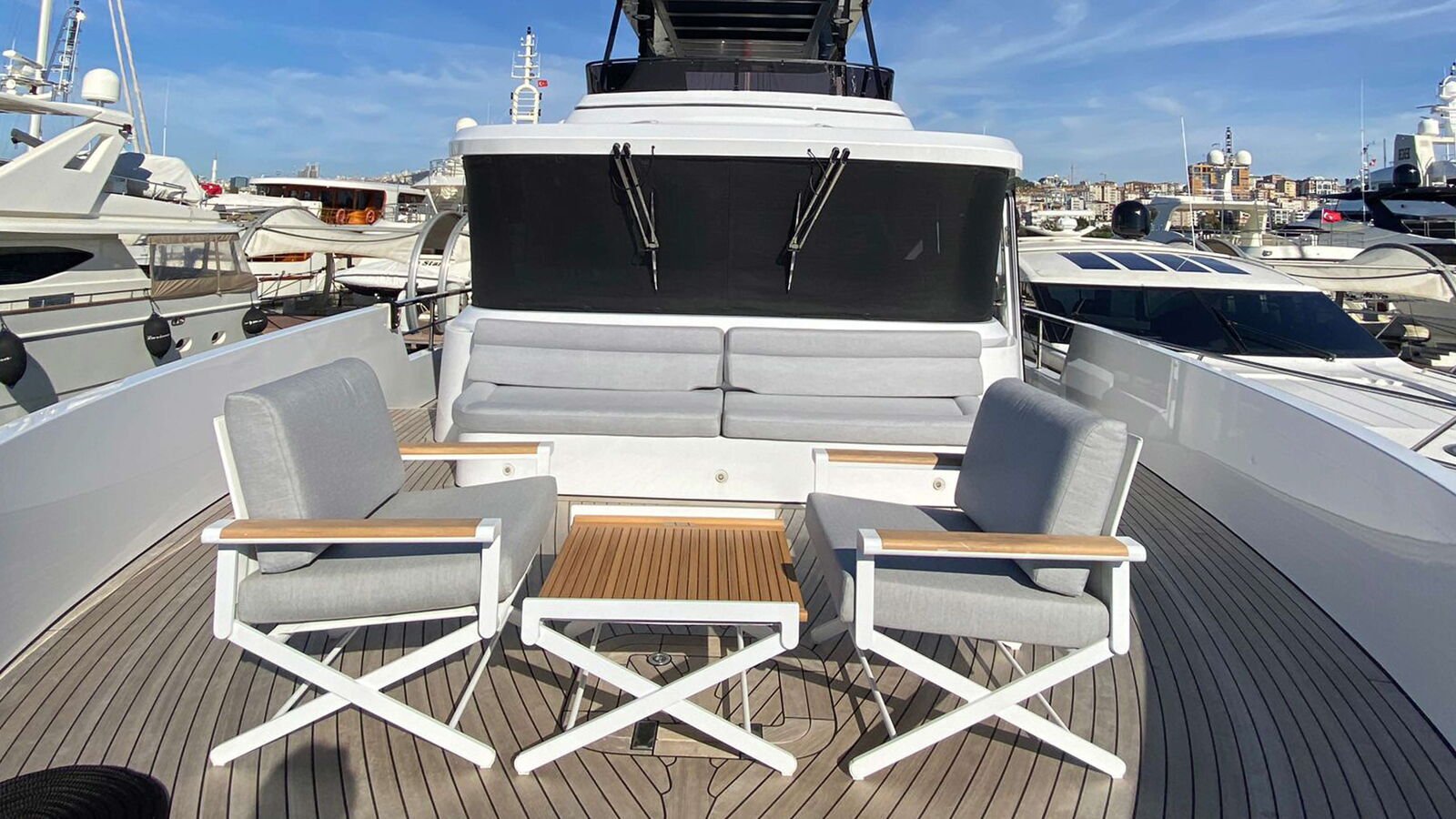
A photograph is two permissions, and usually only the first is discussed
A yard photographs her because the work requires it. The photographic record taken on arrival exists to attribute damage. A hold point closed before a lining goes on produces evidence of a condition about to be covered — a reading, a signed record, or a photograph with a date, a scale and a location in it. A weekly report with photographs is how an owner abroad sees progress. None of that is editorial.
The second permission is what may later be done with those files. An image taken as evidence and an image used to show what a yard can do are the same file doing two jobs. The specification is where to say whether the second job is allowed, and for which images.
Underneath both sits the question of who owns the files, usually left unasked, and it decides the other two in practice. Where it has a legal edge it belongs to her owner's advisers.
The name goes first, and it is the cheapest of the four to protect
A hull can be photographed from a distance that defeats the transom. She cannot be worked on without somebody writing something on a list, a drawing, a purchase line and a gate pass.
So withholding a yacht's name during a refit is not one instruction. It is a decision about each place her identity gets written down, and the places that matter are the dull ones. What the berth allocation says. Whether a purchase order to an outside supplier carries her name or a project reference.
A project reference answers most of it, and it costs nothing if it is adopted at the start.
The trades doing the work necessarily learn the scope
Eleven shops metres from the berth means the joiner knows what the joinery is, the pipe shop knows what the piping is, and the coatings foreman knows what the substrate looked like before the first coat. That is not a leak. It is the condition of work done by people who can be asked a question.
It does mean more people legitimately know something about her than are in any meeting. Add the makers' engineers who attend commissioning, and the fabricator given a drawing before it quotes.
An undertaking that stops at the yard's own payroll therefore describes a smaller circle than the real one. The question worth putting at tender is not whether a yard will keep quiet. It is what flows down: whether an outside supplier is given her name or a reference, and whether an attending engineer signs anything on the day. Both are seldom put in writing.
The crew's own feed is the channel no clause at the gate reaches
A yacht in a yard has people living with her, and they have telephones and an audience of their own. The exposure is real, and awkward: crew social media during a yard period is made by the owner's own people rather than the yard's.
A yard's own undertakings do not reach it. A yard can govern what it publishes and what it asks of a supplier. It is not the yard's place to instruct a crew member about their own account, and it should not try.
If there is to be a boundary it belongs in the crew's own terms, set by the owner or the management company, before she arrives rather than after a photograph of an open compartment has been seen by somebody who recognises it. The useful version is specific: whether the yacht may appear, whether her name may appear, whether anything showing scope — a stripped interior, an opened tank — may appear at all.
The same four answers, cheap in a specification and dear in a photo set
None of this is hard to settle. It is hard to settle late. A project reference is a convention at the outset, a rename after award. A photography permission is a line in the specification, a request to take something down afterwards. A flow-down asked at tender is a question, a retraction once a supplier holds her name. A line in the crew's own terms is a briefing before she arrives, a reprimand after.
Reviva refits, rebuilds and restores at the yard in Tuzla, and its in-the-yard page publishes the scope, the stage and the dates of the programme on the floor. What an owner wants said about their own hull is theirs to set, and the place to set it is the specification that goes out to tender.
Written at the yard in Tuzla. Nothing here describes a confidentiality regime, a publication clause or any contractual term as settled; what may be said about a particular yacht is fixed in her own specification, and anything with a legal edge belongs to her owner's advisers.
Mark the four permissions on the specification
Send the specification and the draft programme with the four marked against them: what may be photographed and what may later be done with the images, whether her name is used or a project reference, what an outside supplier and an attending engineer are told, and what the people aboard may post. Each can then be answered line by line, while the specification is still a draft rather than after the first set is up. Write to info@revivarefit.com.
START A REFIT