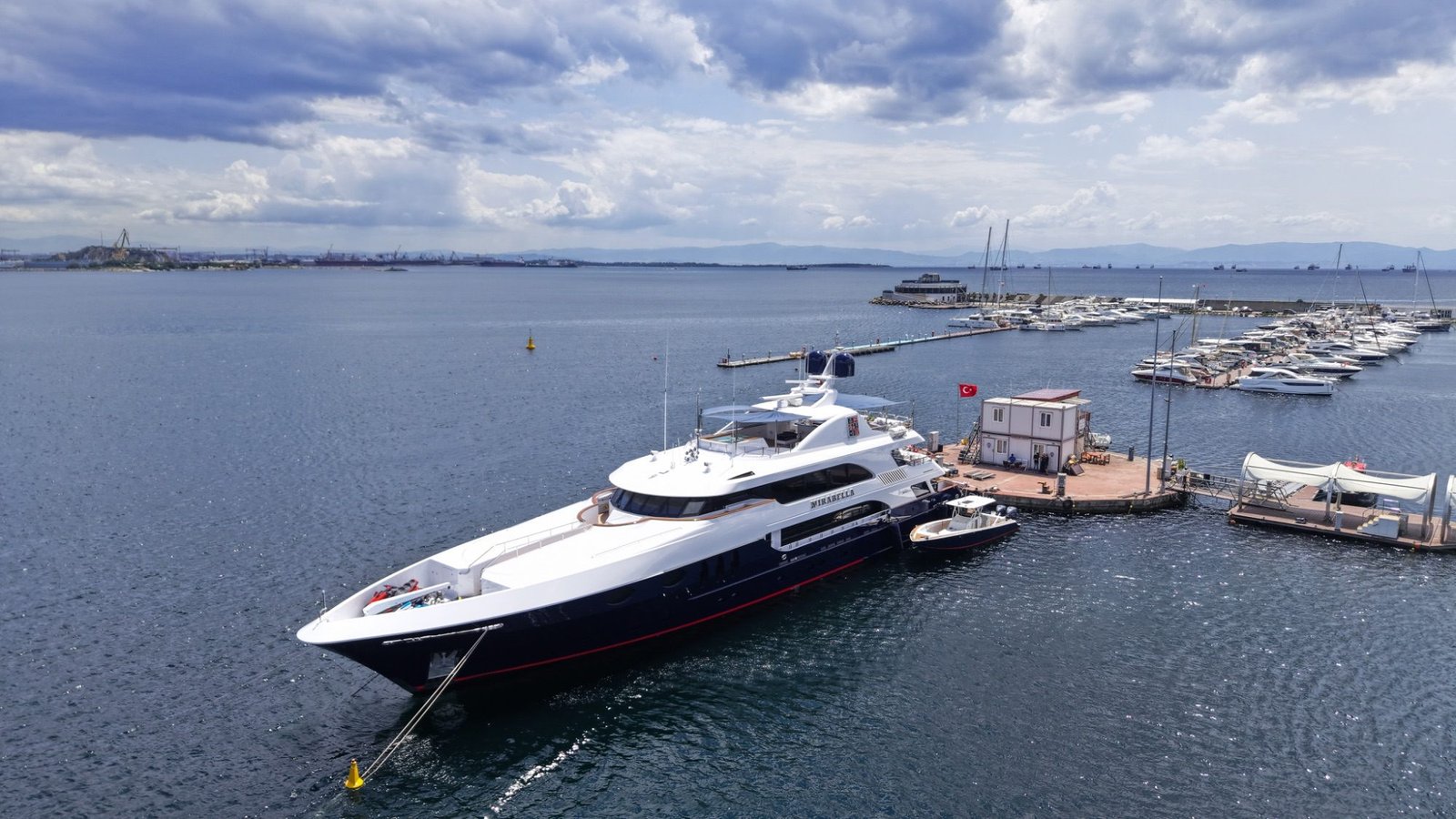
Two seasons after redelivery, the coating, the systems and the joinery are inspected against the day she left.
The most useful inspection a refit yard can carry out is the one on a vessel it delivered itself, two seasons later, with the original file open beside it. Everything else is an opinion about somebody else's work. This is the only test of your own.
Zima is a 23.1-metre hull, built in 2023 and worked here as R13 before her 2024 redelivery, including a new Jacuzzi in the bow area. She is back for the first structured look at how that work has aged.
What a post-refit survey checks
- Coating, against the film thickness and adhesion figures recorded at handover — the same measurements, at the same locations, so the comparison is like for like.
- Structures added or altered, which on this vessel means the bow Jacuzzi installation and everything around it: the structure carrying it, the drainage, and the surfaces that meet it.
- Systems that were renewed, run and measured rather than switched on and looked at.
- Joinery and soft goods, in the light they live in, which is the only test that matters for finish.
Why the original file is the point
Without a handover record, a two-year survey produces a condition report: here is how she is now. With one, it produces a rate of change: here is how she is now compared with the day she left, at the same points, measured the same way. The second is worth several times the first, because it tells an owner what to expect next season rather than what happened last.
It is also the only honest feedback loop a yard has. A coating that has held is data. A coating that has moved is data of a more uncomfortable and more useful kind, and it belongs in the specification for the next vessel.
A yard that never re-inspects its own work is running on belief.
What the owner gets out of it
A short, specific list: what needs attention now, what needs attention within a season, and what does not need attention and should be left alone. That third category is the one owners rarely see, and it is the one that saves the most money.
The findings are appended to the vessel's file rather than issued as a standalone document, so the record stays continuous. Continuity is what makes each subsequent inspection cheaper and each subsequent decision better informed.
Written at the yard in Tuzla. Figures quoted are the ones we record on the job and hand over with the vessel.